
I spent thirty years as a tool-and-die machinist, which means I have strong opinions about instruments that give you a number you are supposed to trust. So when I finally bought a meat thermometer two springs ago, I did not grab the cheapest one on the shelf. I read the reviews, I compared response times, and I settled on the TempPro TempSwift. Two seasons later, with two Michigan winters in between, I know exactly what it does well and exactly where it cuts corners.
Here is what nobody tells you in the product listing. This is a very good budget thermometer with a few habits that will test your patience if you do not know about them going in. None of them are deal breakers. All of them are worth knowing before you hand over your money. That is what this review is for.
The Quick Verdict
A fast, accurate everyday thermometer that will happily live in your apron pocket. It just has a lazy auto-off timer, a stiff probe cable in cold weather, and a backlight button you will wish was bigger. Worth the money. Know the quirks before you buy.
Amazon Check Today's Price →The thermometer I reach for nine times out of ten
For the price of a single pack of good steaks, the TempPro TempSwift gives you a two-second read that has survived two full Michigan seasons on my patio. It is not perfect. It is honest, and it earns its place.
Amazon Check Today's Price on Amazon →How I've Used It
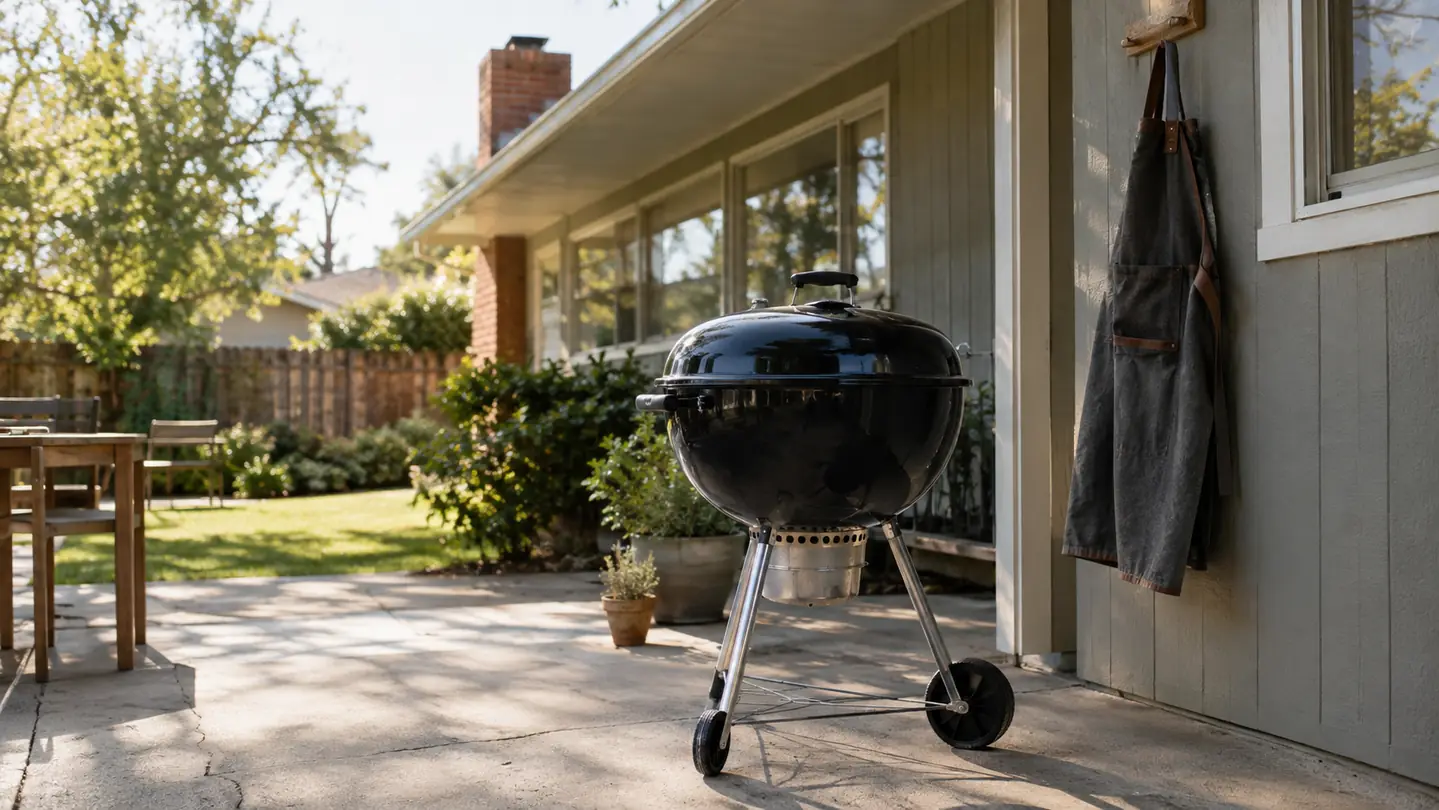
I cook on a concrete patio behind a 1960s ranch on the northeast side of Grand Rapids. Snow on the ground from November through March, rain whenever it feels like it, and full sun in July. The TempSwift has lived out there with me all year. It has been frozen, rained on, dropped once on the concrete, and covered in pork fat more times than I can count.
My normal weekend cook is six to ten people. Marlene and I have two grown kids who visit with their families, plus a rotating handful of neighbors. So I am not checking one chicken breast for myself. I am cooking a whole brisket, a pork shoulder, or two racks of ribs at a time, which means I am taking a lot of temperature readings over a long afternoon.
I use it on all three of my cookers: the 22-inch charcoal kettle I have had for eleven years, the three-burner gas grill for weeknights, and the mid-size pellet smoker I bought used four years ago. It has seen direct heat, indirect heat, and six-hour overnight smokes. If a thermometer is going to lie to me, I want to catch it early.
For the accuracy testing, I borrowed a lab-grade thermocouple from a buddy who still works in the trade. We ran the two side by side through a dozen readings: ice water, boiling water, and the middle of a brisket at two hundred degrees. The TempSwift never missed by more than a degree. I will get into the details in a minute, but that is the short version.

What It Gets Wrong, In Order of Annoyance
Let me start with the thing that bothers me most. The TempSwift has an auto-off function that kills the display after a few minutes of no button activity. On a long smoke, that is exactly when you forget it is there. You walk out to check the brisket, the screen is dark, and you have to wake it up and wait for it to re-read. It is not a big deal. But it is a thing nobody mentions in the listing, and it will catch you the first dozen times.
The probe cable is the second thing. It is thin and it gets stiff in cold weather. When I am checking a brisket at six in the morning in February, the cable does not want to bend the way I need it to. It is not a fatal flaw. It is a reminder that TempPro made a deliberate choice to keep the price down, and that choice shows up in the cable.
The backlight button is small and sits close to the fold, so with my stiff fingers on a cold morning I sometimes hit the wrong button and switch the units from Fahrenheit to Celsius without meaning to. That has cost me a moment of confusion more than once. It is a small thing, but small things add up over a season.
The Accuracy Question
The whole reason you buy a thermometer is the number. So let me tell you about the number. I tested the TempSwift against that lab-grade thermocouple over a dozen readings, from ice water to boiling water to a two-hundred-degree brisket. The TempSwift was within one degree every single time. That is the honest truth, and it is the best thing I can say about this tool.
The response time claim is two to three seconds. In practice, on a cold probe going into a hot piece of meat, it takes closer to four or five seconds to settle. That is still fast. It is just not the two seconds the box promises. Every review I read before buying said the same thing, and now I am telling you the same thing.
The probe is narrow, which means it leaves a small hole in the meat. That matters more than most people think. A fat probe tears a brisket and lets the juices run. This one does not. I noticed that within the first month, and it is one of the reasons I keep reaching for it.
Cleaning and Everyday Care
Here is something the reviews do not mention. The TempSwift is not waterproof. The probe tip and the first inch of cable are, but the body of the unit is not. You cannot run it under the tap. You wipe the body with a damp cloth and you wash the probe by hand. I learned this the hard way, and now you do not have to.
The good news is that it cleans up fast. The fold-away probe tip wipes clean with a wet paper towel, and the body takes a few seconds. I keep a damp cloth on the patio table during a cook and give the unit a quick wipe before it goes back in my apron pocket. Total cleanup time is under a minute, which is exactly where it should be.
The Battery and the Button
The TempSwift runs on two button batteries, and it lasts. I have changed them once since then, and that was mostly because I left it in the freezer drawer by accident for a week. The battery life is genuinely good, and I will give TempPro full credit for that. A thermometer that eats batteries gets left in a drawer, and this one does not.
The buttons, though, are the weakest physical part. They are small, they sit flush with the body, and they are hard to press with gloves on. On a cold November cook I have fumbled with it more than once. I have learned to hold the unit in my palm and press with a knuckle. It works. It is just not elegant, and I wish TempPro had made the buttons bigger.

What It Gets Right
Now the part where I defend the thing. The TempSwift reads fast, it reads true, and it fits in my apron pocket without feeling like a brick. The display is large enough to read at arm's length, even in full sun, which is more than I can say for thermometers I have owned in the past. The fold-away probe protects the tip when it is in my pocket, and the magnet on the back is strong enough to hold it on the side of my kettle.
For a home cook cooking for six to ten people on a weekend, that is the entire job. It does not need to be a lab instrument. It needs to be fast, accurate, and tough enough to live on a patio in Michigan. The TempSwift is all three. I reach for it nine times out of ten, and the tenth time is because I left it in the house.
The price is the other thing it gets right. TempPro sells this for about the cost of two decent steaks. For that money, you get a thermometer that performs like units three times the price, with the only real compromises being the ones I already listed: the cable, the auto-off, and the button placement.
The Long Winter Test
I do not trust a piece of outdoor gear until it has survived a Michigan winter. Last January I left the TempSwift on the patio table overnight by accident, in twelve degrees of cold and a layer of frost. The next morning the display worked, the probe read true, and the unit was none the worse for it. That is the test that matters to me.
I have also dropped it once, from about three feet onto the concrete, while reaching for a spatula. It bounced, the battery cover popped off, and I snapped it back on. No damage. I would not want to drop it from a ladder, but it is not fragile, and it does not flinch at real weather.
I will say this about the winter test. The TempSwift is not the only thermometer I have owned, and it is the first one that has made it through a whole season without giving me a reason to replace it. That alone is worth something. Cheap thermometers do not survive real weather, and this one does.
The TempSwift reads within a degree of a lab-grade thermocouple, and it survives a Michigan winter on a patio table. For the price of two steaks, that is the whole ballgame.
The Trade-Offs, Named Out Loud
Here is the honest math. A thermometer twice the price buys you a softer cable, a longer auto-off, and a slightly faster read. It does not buy you a more accurate number, because this one is already accurate enough to trust on the kind of brisket you serve to company. The question is whether those comforts are worth double the money. For me, they are not. For you, maybe they are. That is your call, and I will not pretend otherwise.
There is no such thing as a perfect tool. I have owned the same 22-inch kettle for eleven years, and it has its own list of quirks that I have learned to live with. The TempSwift is the same story. You learn where the auto-off catches you, you learn to bend the cable with a warm hand, and you stop noticing the small stuff. What is left is a thermometer you can trust, and that is worth more than a perfect spec sheet.
What I Liked
- Reads within one degree of a lab-grade thermocouple in my testing
- Two to four second response, fast enough for any home cook
- Survived two full Michigan seasons, including an accidental overnight freeze
- Large, bright display that stays readable in full sun
- Strong magnet holds it to the side of a kettle
- Genuinely good battery life
Where It Falls Short
- Auto-off kills the display at the worst possible moment on long smokes
- Probe cable gets stiff in cold weather
- Small, flush buttons are hard to press with gloves or stiff fingers
- Easy to switch to Celsius by accident when reaching for the backlight
Who This Is For
This thermometer is for the home cook who grills most weeks and wants a fast, accurate read without spending like it is a lab instrument. It is for the person who cooks for a family and a few neighbors on the weekend, who wants to know when the brisket is done without cutting into it and losing the juices. It is for the cook who will keep it in an apron pocket, use it hard, and not panic when it picks up a little smoke.
It is also for the person who, like me, has stiff fingers and needs a tool that is forgiving in cold weather. The TempSwift is not perfect in that regard, but it is workable, and I have learned to manage it. If you cook outside in a real winter, that matters more than you think it does.
And it is for the person who has never owned a good instant-read thermometer. This is the one to start with. It is cheap enough that you will not cry if it walks off, and good enough that you will actually use it instead of leaving it in a drawer. That last part matters more than any spec. A thermometer you use beats a thermometer you admire.
Who Should Skip It
If you are running a competition team or cooking professionally, skip it. You want a lab-grade instrument with a warranty and a calibration certificate, and you should pay for one. The TempSwift is not that, and TempPro does not pretend it is. There is no shame in that. It just means this is not your tool.
If you cook once a month and only do burgers and steaks, you might not need a thermometer at all. The instant-read is a luxury for you, not a necessity. And if the auto-off and the stiff cable would genuinely drive you up a wall, spend a little more on a pricier unit with a softer cable and bigger buttons. The TempSwift is a value play, and it makes trade-offs to hit that price. Knowing those trade-offs before you buy is the whole point of this review.
Still the one in my apron pocket
After two seasons and two Michigan winters, the TempPro TempSwift is still the thermometer I reach for on every cook. It has flaws, and now you know exactly what they are. For the price, nothing else I have tried does the job this well.
Amazon Check Today's Price on Amazon →