
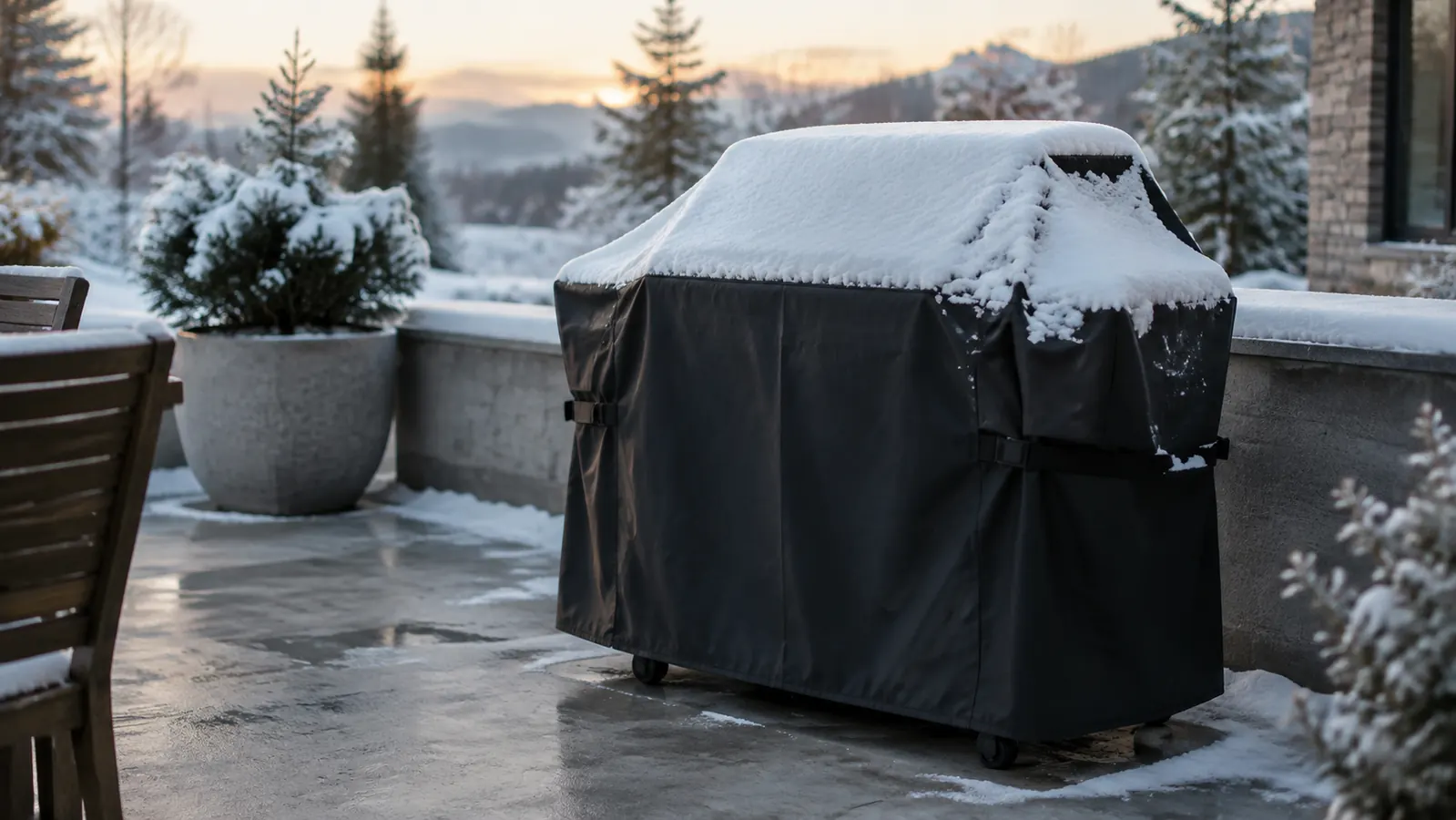
Last November I finally gave up on the cheap covers that blew off my three-burner gas grill every time the wind swung around. I had gone through three of them in four years, and each one ended the same way: faded, split at the seam, and holding a puddle of melted snow against the cooking box. So I ordered the NEXCOVER 60 inch grill cover, the 600D heavy duty version, and strapped it down before the first real snow. This is how it did through one full Michigan winter on an open concrete patio.
I am not a man who reviews things for a living. I am a retired tool-and-die machinist who cooks for his wife Marlene, the kids when they visit, and a rotating handful of neighbors. I bought this cover with my own money because I was tired of replacing gear every spring. What follows is what I saw, what I measured, and what I would tell a neighbor who asked.
The Quick Verdict
The NEXCOVER survived a winter that wrecked three cheaper covers, and it still fits snug. It is not cheap, but it is the last grill cover I expect to buy for a while.
Amazon Check Today's Price →Stop buying a new cover every spring
The NEXCOVER held up through snow, freeze-thaw and wind on an open patio. Check today's price on Amazon and see if it fits your grill.
Amazon Check Today's Price on Amazon →How I've Used It
The cover lives on the gas grill, which sits against the back wall of the patio with no roof over it. The grill is a three-burner unit from a big box store, about 60 inches across the handles. The NEXCOVER is made for a 60 inch grill, and it fits with about two inches of slack at each end. The hem reaches down past the control panel and covers the propane tank, which is where a lot of cheaper covers stop.
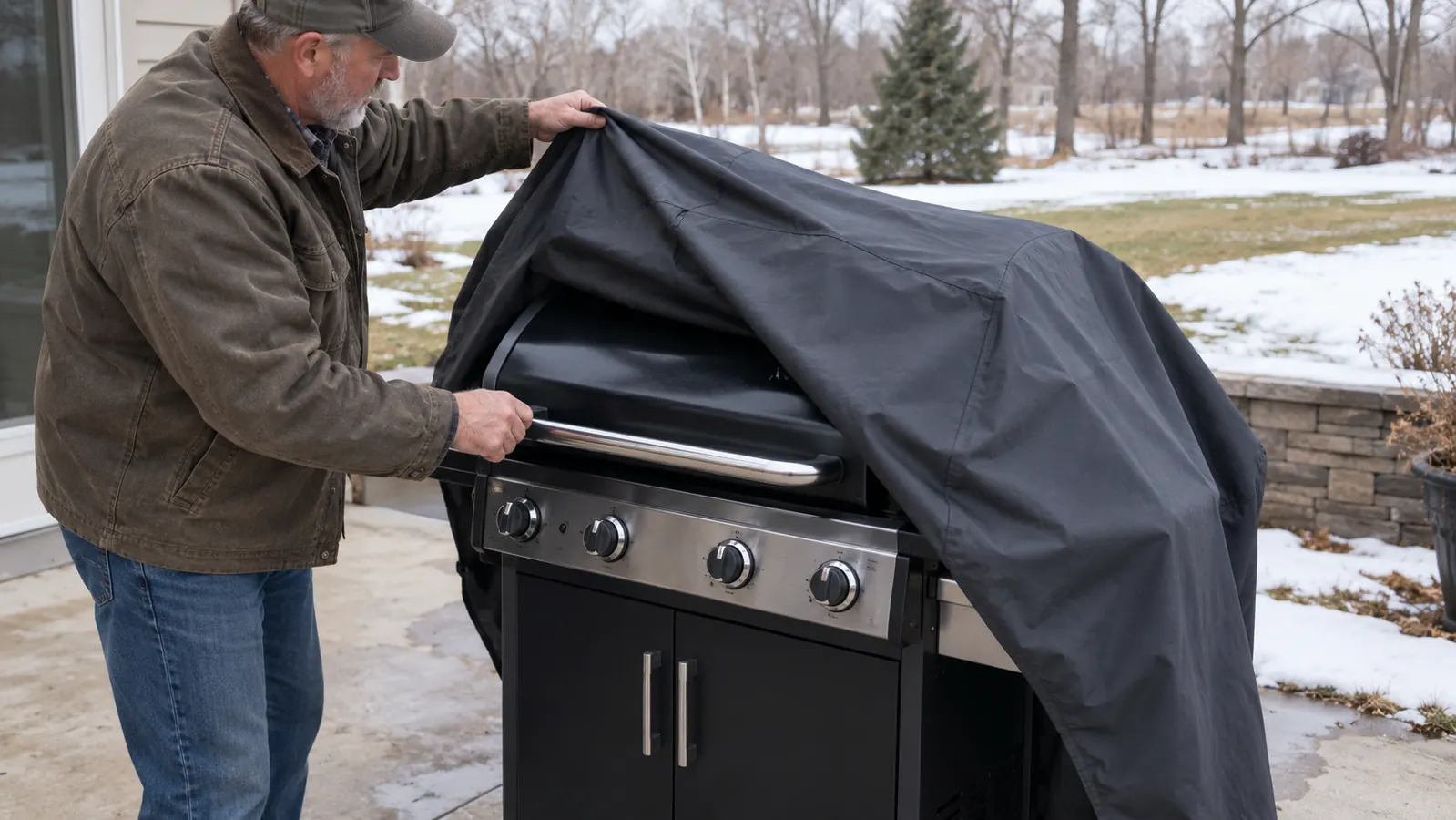
I put it on in early November and did not take it off until the first cook of April. Through the winter I checked it after every storm. The snow piled up on top and the cover did not sag into the cooking box. The strap around the base held in winds that folded a patio umbrella. In late February we had a thaw that turned everything to slush, then a hard freeze. The fabric stayed flexible enough to pull off without cracking, which was the thing I worried about most with my stiff fingers.
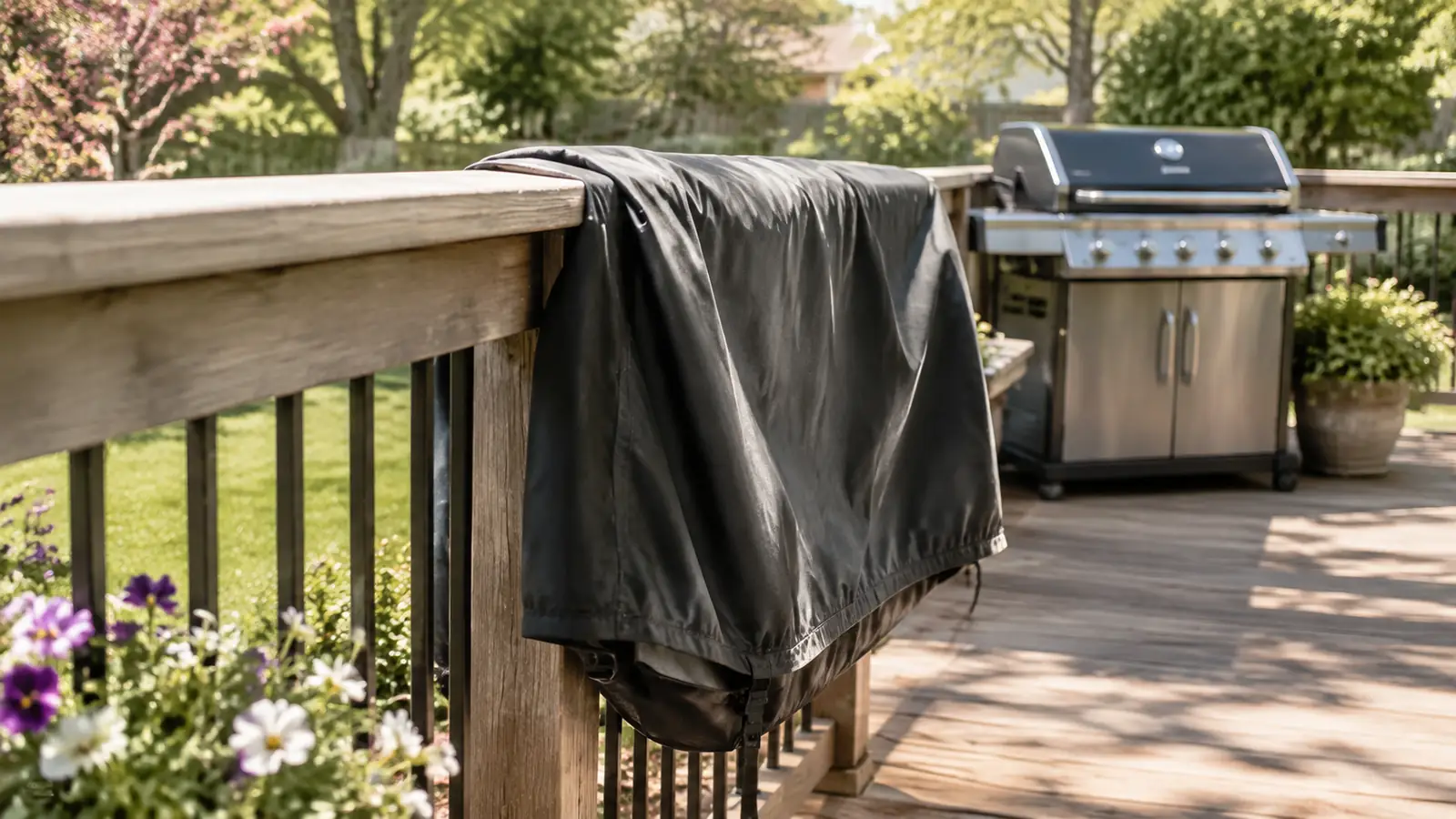
Come April 9, I peeled it off for the first cook of the season. The grill underneath was dry, the burners lit on the first try, and there was no rust on the firebox. That had never happened with the previous covers. I hung the cover over the railing for an afternoon to air out, then put it back on.
I also kept a rough log. After each storm I would brush the snow off with a broom, mostly to keep the weight down, and I noted any place where the cover looked strained. The only spot that ever worried me was the corner nearest the house, where the wind wrapped the fabric around the handle. By spring that corner still looked like the rest of the cover. No thinning, no shiny wear marks, no broken threads.
The strap is the part I expected to fail first. Plastic buckles get brittle in the cold, and I have broken plenty of them on other gear. This one survived the whole winter. I unbuckled it maybe a dozen times to check the grill, and it clicked back together cleanly every time.
What the 600D Fabric Actually Does
The number that matters on a grill cover is the denier count. 600D means the threads are thicker and denser than the 300D or 420D fabric most cheap covers use. You can feel the difference the first time you pick it up. The NEXCOVER has a stiff, almost canvas-like hand to it, and the seams are taped rather than just sewn. That taped seam is what keeps water from wicking through the needle holes, which is exactly where the old covers failed.
The underside has a coated finish that does not feel like a thin plastic liner. It is bonded to the fabric, so it does not peel away after a season of sun. I cannot tell you the exact chemical makeup, and I do not need to. What I can tell you is that after five months of weather, the inside still looked dry and the coating showed no cracks when I flexed it.
The straps are not the bungee kind that stretches out. They are a webbed strap with a plastic buckle, and you can pull them snug without fighting a hook. With my hands, that matters. The old covers had elastic cords that I could not get tight enough, and the wind always found the loose spot.
The stitching around the strap loops is double stitched, and the loops are reinforced with a separate piece of fabric. That is the kind of detail you only notice when a cheaper cover fails at exactly that point. On the old covers, the strap ripped out of the hem after a season of wind. Here the loops are part of the main seam, not an afterthought.
I measured the fabric thickness with a caliper because that is what I do. The NEXCOVER came in at about 0.02 inch on the coated side, which is roughly twice what I measured on the old cover before it failed. That number does not mean much on its own, but it matches what my hands told me.
How It Handled Snow, Wind, and Freeze-Thaw
Grand Rapids gets real winters. We had a stretch in January where the snow stayed on the cover for three weeks straight, and one storm dropped about nine inches overnight. The cover took the weight without the center sagging down onto the cooking grates. There was a slight dip at the middle, but the fabric held its shape and shed most of the snow off the sides.
The wind test came in mid-December. A front blew through with gusts I would guess at forty miles an hour, and it folded a patio umbrella next to the grill. The cover stayed put. The strap held the hem against the base, and the cover did not balloon up the way the old ones did. I checked it the next morning and it had not moved an inch.
The freeze-thaw cycle is what kills covers. Snow melts, soaks into the fabric, then freezes and expands the weave. The NEXCOVER went through that repeatedly. In late February we had three days of above-freezing rain, then a hard freeze with an overnight low near zero. When I pulled the cover off, it flexed like it had not been through anything. I let it dry, and it went back on the same day.
The worst day was an ice storm in early March. We got freezing rain all night, and by morning the cover was a shell of ice. I had to knock the ice off in chunks before I could open the lid to grab a spatula I had left inside. The fabric underneath was dry. That was the moment I stopped checking it so carefully.
I also left the cover off for a full weekend in April to let the grill dry out after the last snow. The cover sat folded over the railing in sun and rain for two days. When I put it back on, it had not stiffened or faded. I cannot say that about any cover I have owned.
The Tradeoffs I Noticed
The main tradeoff is weight. The NEXCOVER is heavier than the cheap covers, and it does not fold down into a tiny pouch. It takes up space in the garage during the summer if you take it off, and it is a little awkward to wrestle back on when the wind is up. I keep mine on the grill year round, so that is not a problem for me, but it is worth knowing.
The second tradeoff is fit. The 60 inch size fits my grill well, but if your grill is between sizes, you want to measure before you order. The cover is cut generously, and a cover that is too big will catch the wind like a sail. Measure across the widest point, including the side shelves and the handle, and go with the size that matches that number.
The third thing is not really a con, but it is a difference. The cover does not have a drawstring at the bottom. It relies on the strap instead. That works fine on my open patio, but if your grill sits in an exposed spot with no wall behind it, you may want to stake the strap down or add a bungee. I did not need to.
The surface is not smooth, so dust and bird droppings settle into the weave. They clean off with a damp rag, but you will be wiping it down a couple of times a summer. That is a small chore, not a reason to pass on the cover.
The buckle is at the side, not the front. That means you have to reach around the cover to tighten it. With my hands, that is a small annoyance on a windy day. I solved it by leaving the strap slightly loose and tucking the excess under the base. It still held all winter.
Alternatives I Considered Before Buying
Before I settled on the NEXCOVER, I looked at a couple of other covers. The store brand at the big box store was a little cheaper, but it was 420D fabric with a sewn-only seam and an elastic hem. I had already owned that exact cover twice, and both times it split along the seam within two seasons. I decided the longer fabric and taped seams were worth it.
I also considered a vinyl cover with a fleece lining. The lining sounds nice in the store, and it does protect the paint on the grill, but vinyl gets stiff in the cold and cracks where it folds. A neighbor of mine has one that split right across the top after one winter. The NEXCOVER is not lined, and so far that has not mattered. The painted surfaces on the grill look the same as they did in November.
I did not consider the cheapest covers at all. I have learned that lesson enough times. If you only need a cover for a grill that lives under a roof, a lighter one might do. Mine lives in the open, so I bought for the worst month of the year, not the best.
I also looked at a canvas cover treated with wax. It had a lot of fans online, and the material felt tough. But waxed canvas needs to be re-waxed every year, and it is heavy when it gets wet. I did not want a cover that needed its own maintenance schedule. The NEXCOVER is set-and-forget.
And I checked the manufacturer's custom cover for my grill. It was backordered for weeks, and the few reviews I found said it fit perfectly but was not noticeably thicker than the store brand. I decided the generic size from NEXCOVER was the better bet, and so far it has been.
What I Liked
- 600D fabric with taped seams stayed dry through a full winter
- Strap held in high wind on an open patio
- Fabric stayed flexible in below-freezing temperatures
- Fits a 60 inch three-burner grill with room for the tank
- No rust or moisture on the grill when I uncovered it in April
Where It Falls Short
- Heavier and bulkier than cheap covers, awkward to fold
- No drawstring at the bottom, strap only
- Cut generously, so measure your grill before ordering
The grill underneath was dry, the burners lit on the first try, and there was no rust on the firebox. That had never happened with the previous covers.
Who This Is For
This cover is for someone whose grill lives outside in the weather, not under a roof. If you cook on a patio or deck that gets snow, rain, and wind, the NEXCOVER is built for that. It is also for someone who is tired of buying a new cover every spring. The fabric and seams are made to go more than one season, and the strap solves the problem that kills most covers.
It is also for someone with hands like mine. The strap is easy to tighten with cold fingers, the fabric is not so stiff that you fight it, and you do not need to be gentle with the buckles. If you have arthritis or stiff joints, that is a real consideration, not a small one.
Who Should Skip It
If your grill lives under a covered porch or in a garage, you do not need this much cover. A lighter one will do the job, and you can save the weight and the bulk. The NEXCOVER is overbuilt for a sheltered spot.
If your grill is between sizes, or if you want a cover that folds into a small pouch for storage, this one may annoy you. It is a working cover, not a travel accessory. And if you expect a cover to last forever, no cover will. The sun and the cold will eventually get to any fabric. This one just takes a lot longer to get there.
Give your grill the same cover I use
After one Michigan winter, the NEXCOVER is still dry inside and still fits. Check today's price on Amazon and see if it matches your grill.
Amazon Check Today's Price on Amazon →