
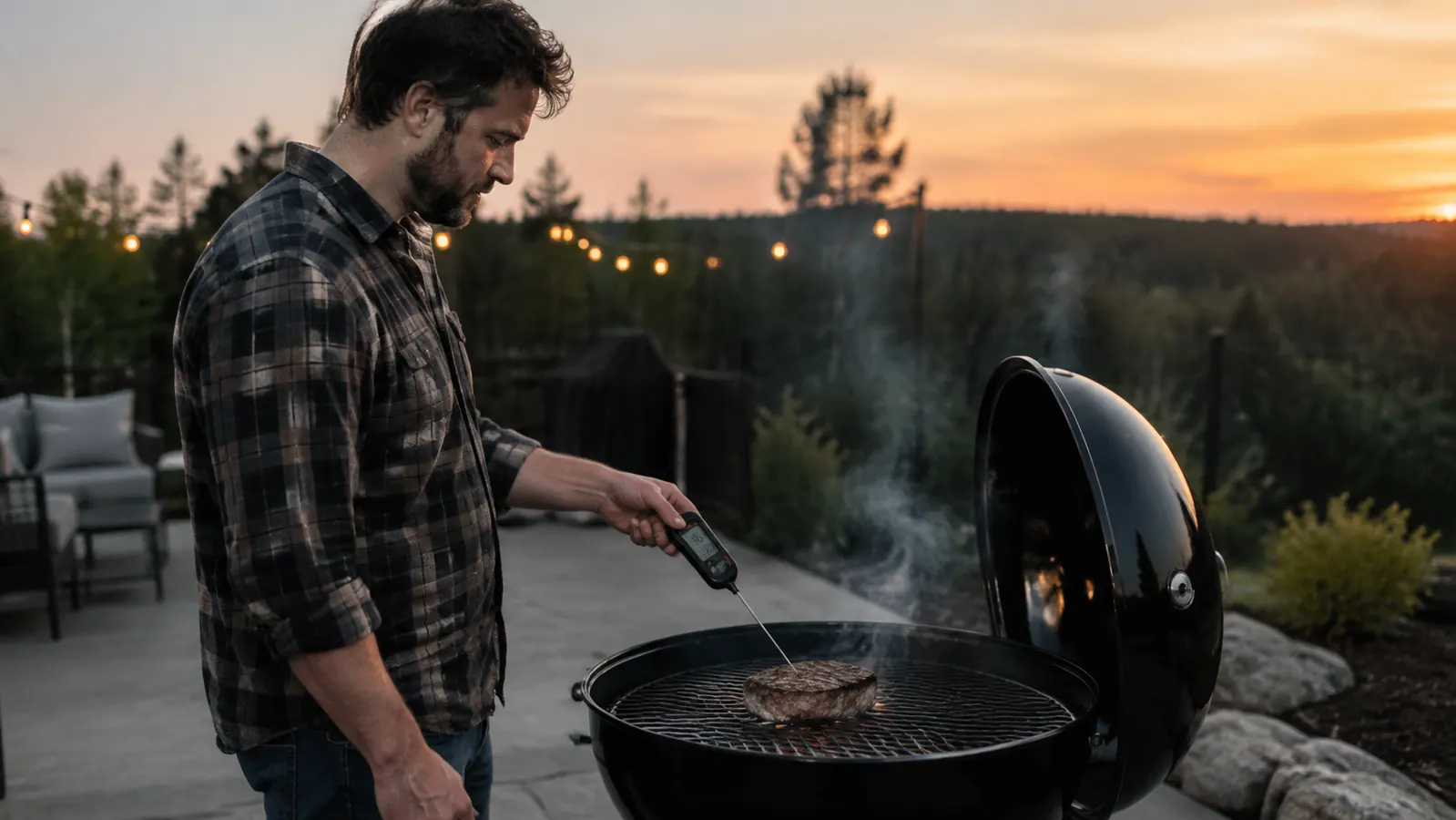
I cooked meat for thirty years before I owned a real instant-read thermometer. I poked steaks with a finger, cut into chicken to check the middle, and pulled pork chops when the outside looked right. Some nights I got lucky. Most nights I served something dry and told myself that was how meat was supposed to be. The TempPro TempSwift changed that in about a week, and not because it is fancy. It is a digital thermometer that reads a temperature in about three seconds. That is the whole trick. You stop guessing, so you stop cooking past done.
This list is the ten reasons I stopped overcooking meat once I started using one. No ten-item roundup where everything is the best. Just what changed on my patio in Grand Rapids, where I cook for my wife and whoever is visiting, on a charcoal kettle, a gas grill, or the pellet smoker.
The thermometer that ended my guessing
The TempPro TempSwift is the instant-read thermometer I reach for on every cook. It reads in about three seconds, and it is the reason I stopped slicing into meat to check. See today's price on Amazon and read the 137,000 reviews.
Amazon Check Today's Price on Amazon →You Stop Poking the Meat and Hoping
For thirty years I tested steaks the way my father did, with a finger on the surface. A steak that felt like the flesh between my thumb and palm was rare. A steak that felt like the heel of my hand was well done. The problem is that everybody's hands are different, and a hot grill changes what your fingers can feel anyway. The TempPro reads the actual middle of the meat in about three seconds. When the number says 130, I pull it. When it says 165, I leave it alone. The guessing is gone, and so is the dry meat.
You Quit Cutting Into the Meat to Check
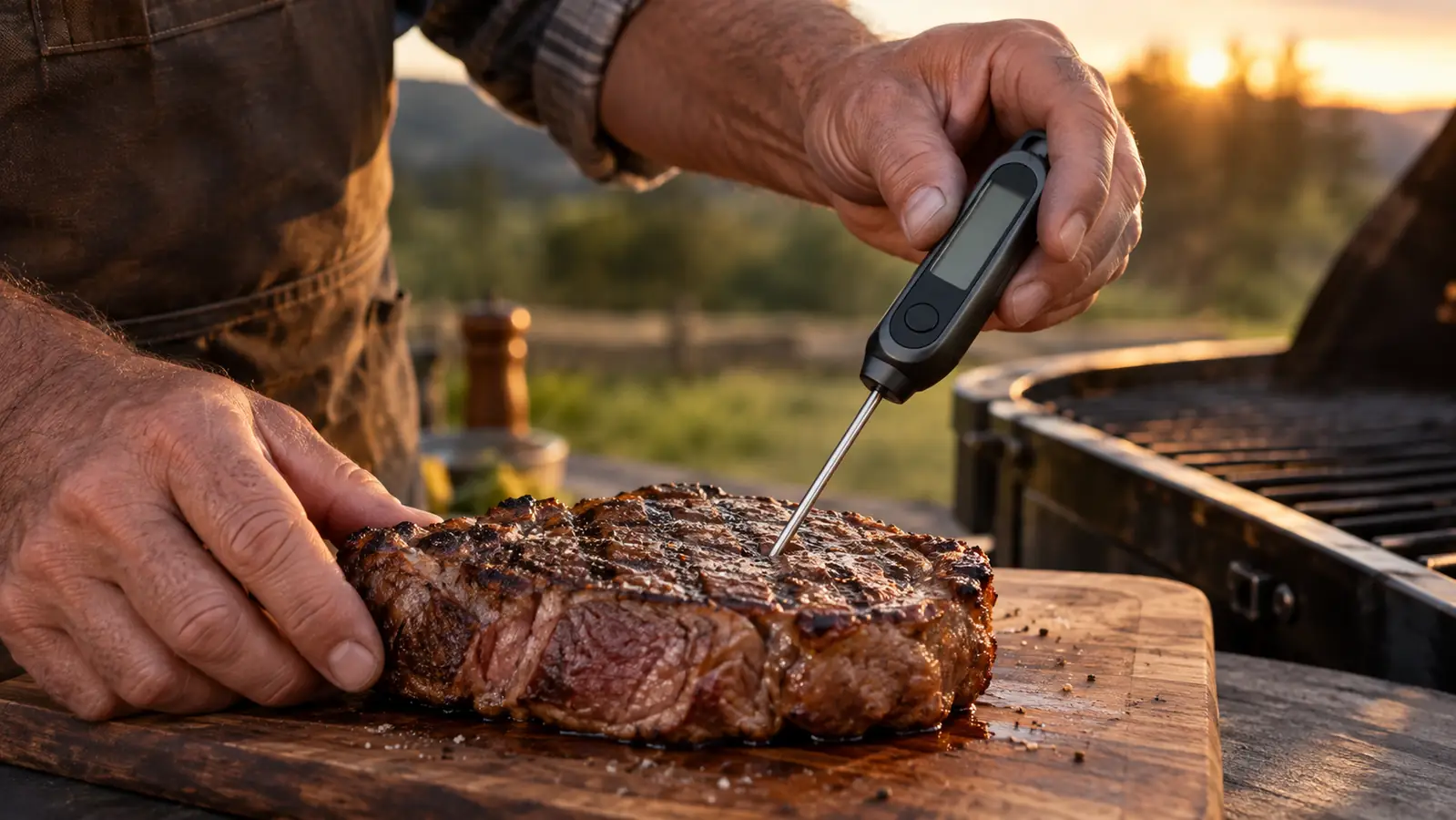
The old way to check a pork chop was to slice into it and look. That works, but it lets out the juices and leaves a scar across the chop. A real thermometer reads through the side without opening the meat at all. I slide the probe in from the edge, wait three seconds, and pull the chop at 140. It rests up to 145 while it sits. Nobody at the table has ever missed the slice-and-check method, and the chops come out noticeably better.
Carryover Stops Being a Mystery
Steak comes off the grill and keeps cooking while it rests. Every cook knows that. What I never knew was how much, because I had no way to watch it happen. With a thermometer, I pull a thick ribeye at 125, set it on the cutting board, and watch the number climb to 132 over the next five minutes. That is carryover, and it is predictable once you can see it. It is also the difference between medium-rare and medium, and the difference between a compliment and a quiet table.
Thick Cuts Stop Being a Gamble
A two-inch ribeye is a problem for a home cook. The outside can look perfect, even charred, while the middle sits at 110. The only honest way to know is to read the center. I probe from the side, straight into the middle of the thickest part, and I know in three seconds whether to flip it, move it to the cooler side, or pull it. That one skill turned the most expensive steaks I buy from a coin flip into a routine.
Chicken Breast Stops Coming Out Like Sawdust
Chicken is where most home cooks overcook, because the fear of undercooked chicken is real and the visual signs are useless. I used to cook breasts until no pink remained anywhere, which meant they hit 170 or 175 and came out dry. Now I pull breasts at 160 and let them rest to 165. They are done, they are safe, and they are actually juicy. Dark meat gets a different number, 175 to 180, because thighs need more heat to break down. The thermometer keeps all of it straight.
Your Smoker Keeps Its Heat
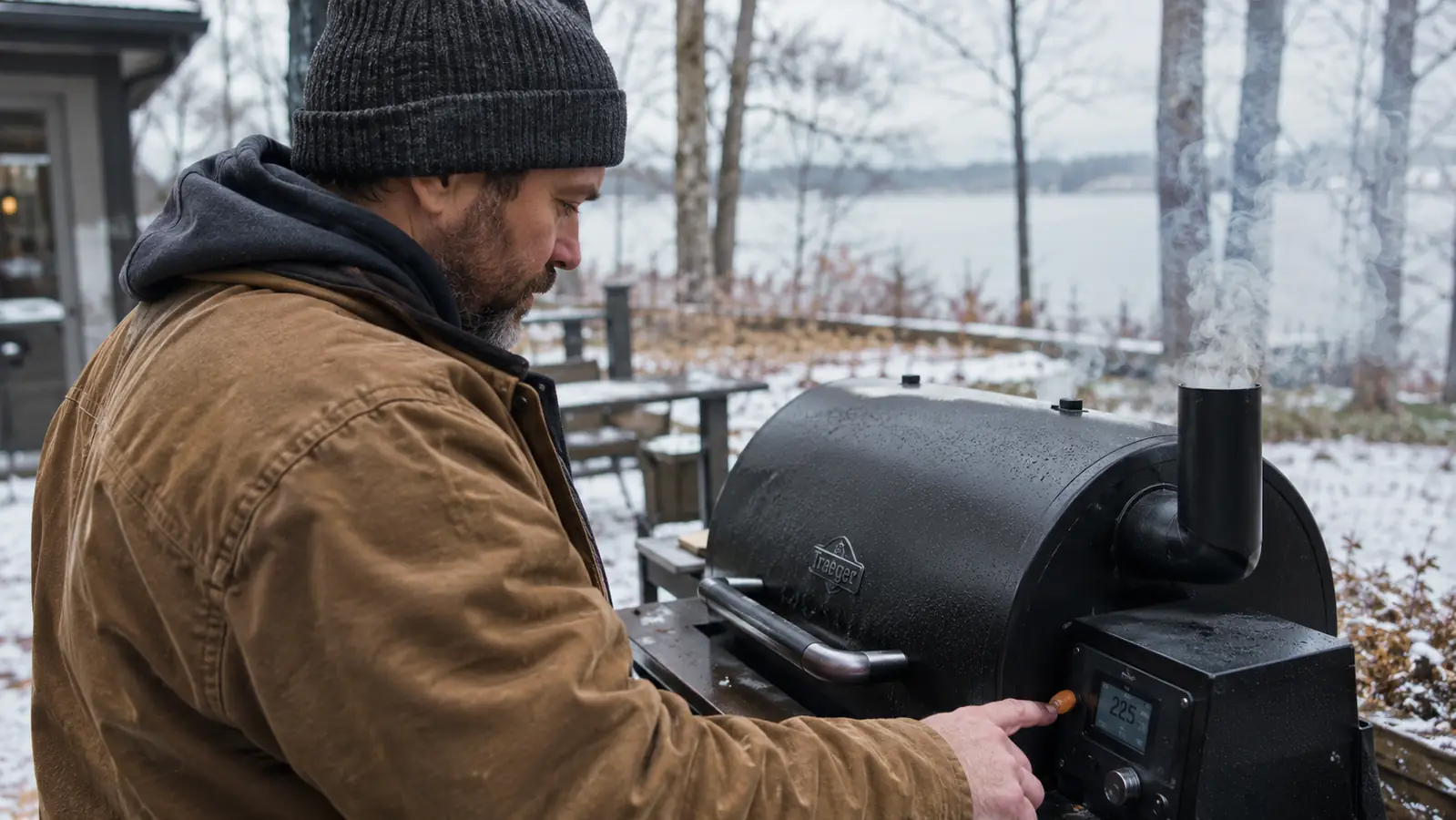
On the pellet smoker, every time I opened the lid to check, I let out heat and smoke and added twenty minutes to the cook. A fast instant-read thermometer means I check through the open top vent or a small gap, read the number, and close it back up. The temperature inside barely moves. On a long brisket cook that adds up to a steadier fire and a better bark, and it is the difference between babysitting the smoker all day and checking in every couple of hours.
Company Dinner Stops Being a Gamble
When six to ten people are standing on the patio with plates, every person has an opinion about doneness. One wants their steak medium, the next wants it rare, and I used to carve and hope. With a thermometer I read each steak as it comes off, sort them by temperature, and send the right one to the right person. It took one cookout for the neighbors to stop asking if I had checked the meat. They know I have, because they can see me do it.
One Saved Roast Pays for It
I am not going to quote today's price, because it moves, but here is the math that matters: a ruined Sunday roast wastes the meat and the whole afternoon, and it happens in the last five minutes. I ruined a chuck roast that way once, cooked well past the medium I wanted, because I had no way to see inside. That one meal was worth more than any thermometer I have bought. Now I cook to a number and I cannot remember the last roast I dried out.
You Do Not Lean Into the Smoke to Check
My hands are not what they were after thirty years in a machine shop, and on a cold Michigan evening I do not want to hover over a hot grate squinting at a piece of meat. With the TempPro, the probe reads the meat while my hand stays clear of the heat, and I read the number at eye level. That matters in November, when the snow is on the ground and I am still out there cooking on the kettle. I can work the whole thing one-handed, which is more than I can say for a lot of my tools.
It Teaches You to Cook by Feel
The real payoff is not the numbers. It is that after a season of watching the readings, you start to know when a steak is ready before you even probe it. You see the color, you feel the spring, you notice how long it has been on the fire, and you have a good idea what the thermometer is going to say. The TempPro confirms what your instincts are telling you, and over time your instincts get better. That is the whole point of the tool. It does not cook the meat for you. It takes the guesswork out so the cooking is yours.
What I'd Skip
I would skip any thermometer that takes more than a few seconds to settle, because you will stop using it. I would skip one with a display you cannot read in the sun, because you will stop trusting it. I would skip the cheap thermometers I owned early on, which were slow and drifted, and I would skip anything that claims to be the last thermometer you will ever buy. No tool is that. The TempPro has limits too. It is an instant-read, so it is not for leaving in the meat while it cooks. For that you want a leave-in probe, and I keep one of those in the smoker. Different tools, different jobs.
I pull a thick ribeye at 125, set it on the cutting board, and watch the number climb to 132 over the next five minutes. That is carryover, and it is predictable once you can see it.
The thermometer I reach for on every cook
If you cook on a grill or a smoker most weeks and you are tired of dry chicken and guessing games, the TempPro TempSwift is worth a look. It reads in about three seconds, it has held up through a full season on my patio, and it has over 137,000 reviews on Amazon. See today's price and decide for yourself.
Amazon Check Today's Price on Amazon →