
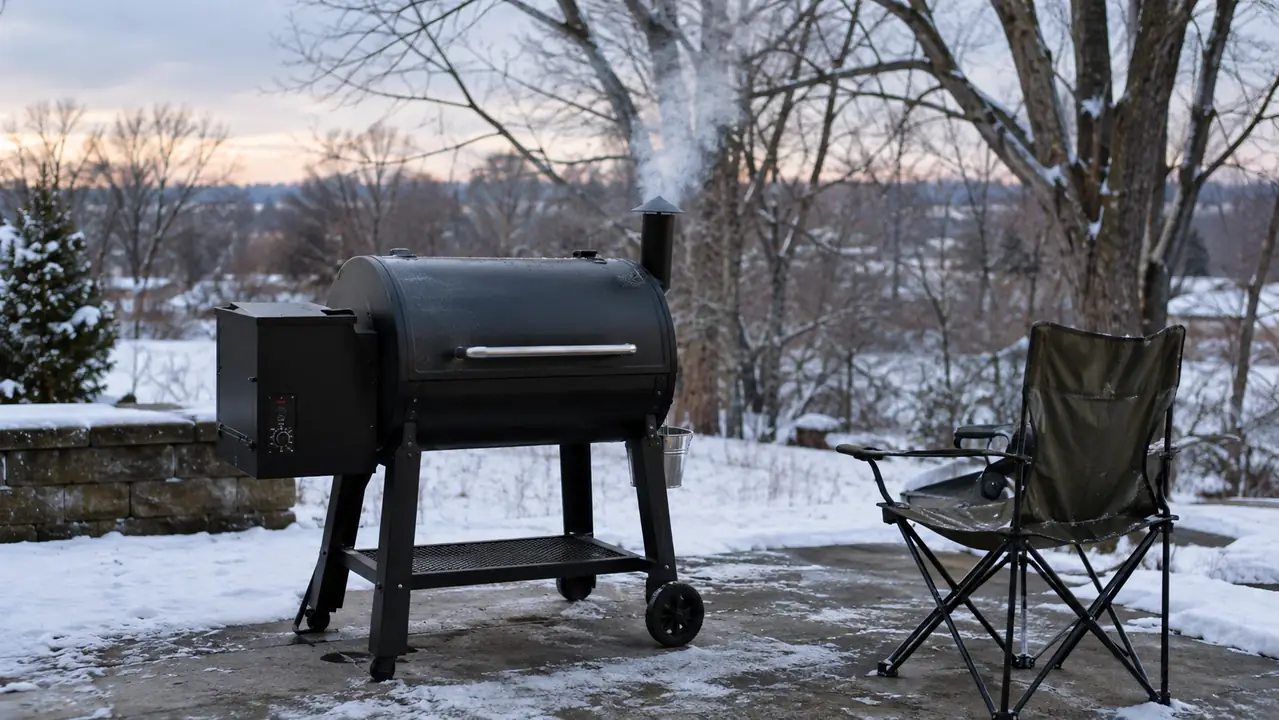
Cold weather changes how a pellet smoker behaves, and if you live in Michigan you find that out the hard way. I am Wes Duquette, retired from thirty years in a tool-and-die shop, and I cook on a concrete patio behind a 1960s ranch house on the northeast side of Grand Rapids. The snow starts in November and it does not leave until March. Last February, on a 14-degree morning, I loaded a ten-pound brisket, set the smoker for 225, and watched the temperature needle wander between 190 and 260 for the better part of an hour. The meat came out edible in the end, but the cook ran three hours longer than it should have, the smoke ring was patchy, and I stood out there in the cold babysitting a machine that should have been doing the work itself.
That is what a cold-weather pellet cook looks like when you do not plan for it. The trouble is usually not the pellets. A good hardwood pellet like the Bear Mountain hickory I keep on hand burns fine in the cold. The trouble is everything around the pellet: the firepot that needs to be clean, the controller that reacts slowly when the steel around it is frozen, and the drafts that push cold air through the cooking chamber. All of it is fixable with routine. I have run this same mid-size smoker, bought used four years ago, through four Michigan winters now. The steps below take about fifteen minutes before you light the fire, and they save you three hours of standing in the yard.
Start With Pellets That Burn Predictably
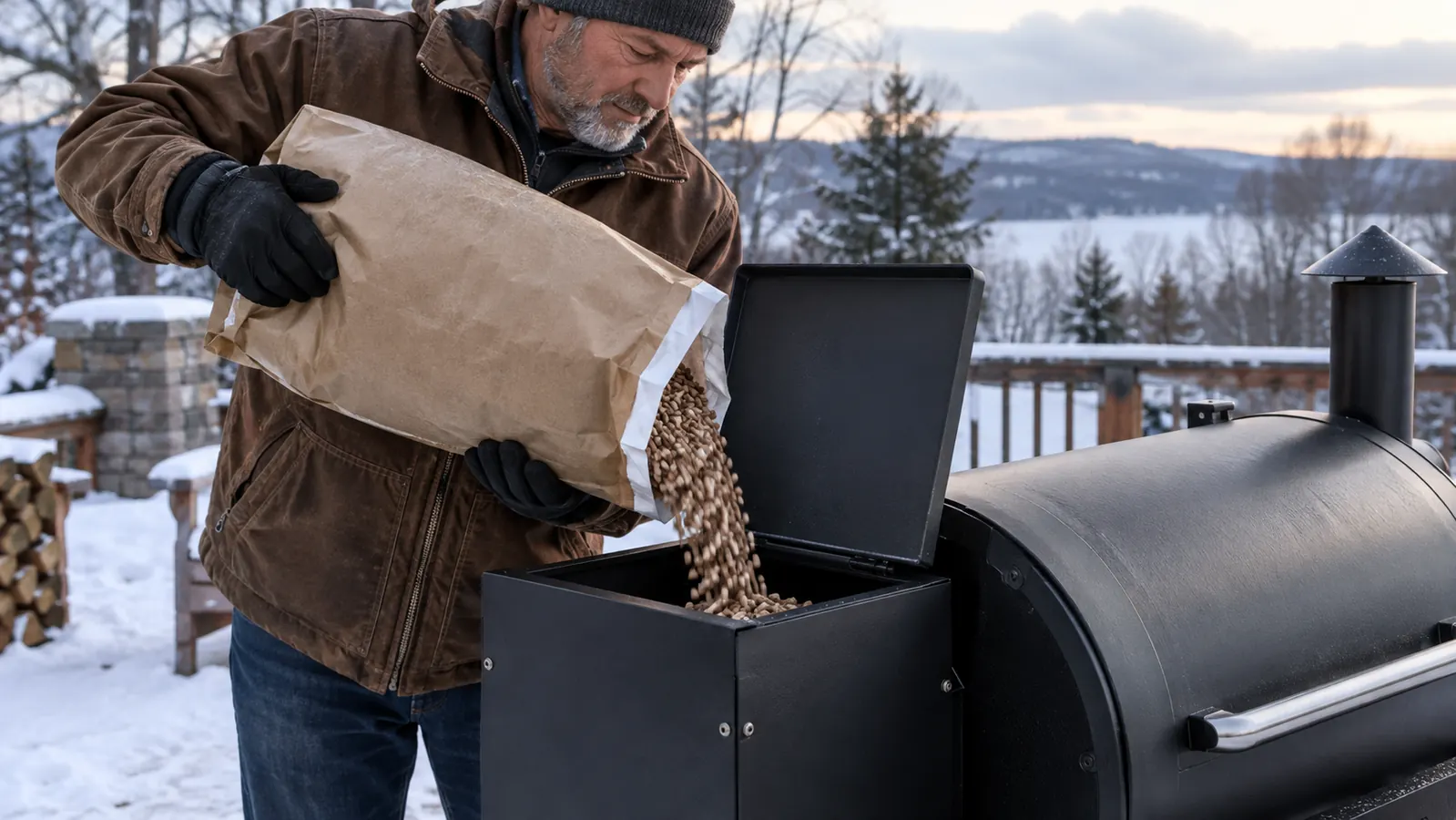
I have had the best luck with Bear Mountain hickory in cold weather. The burn is steady, the smoke is clean, and the bag closes up tight so it stays dry between cooks. Check today's price on Amazon and keep a fresh bag on hand before the first freeze.
Amazon Check Today's Price on Amazon →Step 1: Empty the firepot and vacuum the ash before every cold cook
In warm weather you can skip a clean firepot and get away with it for a cook or two. In the cold you cannot. Ash holds moisture, moisture freezes overnight, and frozen ash clumps in the auger tube and stalls the feed. I shop-vac the firepot the night before a cold cook, when the unit is cold and safe to touch, and I pull the drip tray far enough back to see the opening of the auger tube. Ten minutes of work. On a 15-degree morning in January I skipped it once, and the auger jammed thirty minutes into the cook. The smoker shut itself down, the controller threw an error I had never seen, and the brisket sat in a cold chamber for an hour while I cleared the tube with a screwdriver and a lot of patience.
Keep a dedicated small shop vac for the smoker and store the hose inside the house. A frozen hose is useless. I keep mine in the mudroom so it stays flexible, and I blow the ash out of the firepot, the burn grate, and the little air inlet holes along the bottom. Those holes are easy to ignore and they clog first. If the fire is weak and the temperature will not climb, nine times out of ten the air holes are blocked. Check those before you blame the controller.
One more thing about moisture. Pellets that sit in a cold garage all winter pick up dampness, and damp pellets swell in the auger and jam it just as surely as ash does. I bring the bag I am using inside the night before a cook and let it come to room temperature. It is a small habit, but it took me two jams to learn it, and both of those happened on the coldest days of the year.
Step 2: Set the temperature and give the controller a full 20 minutes before the meat goes on
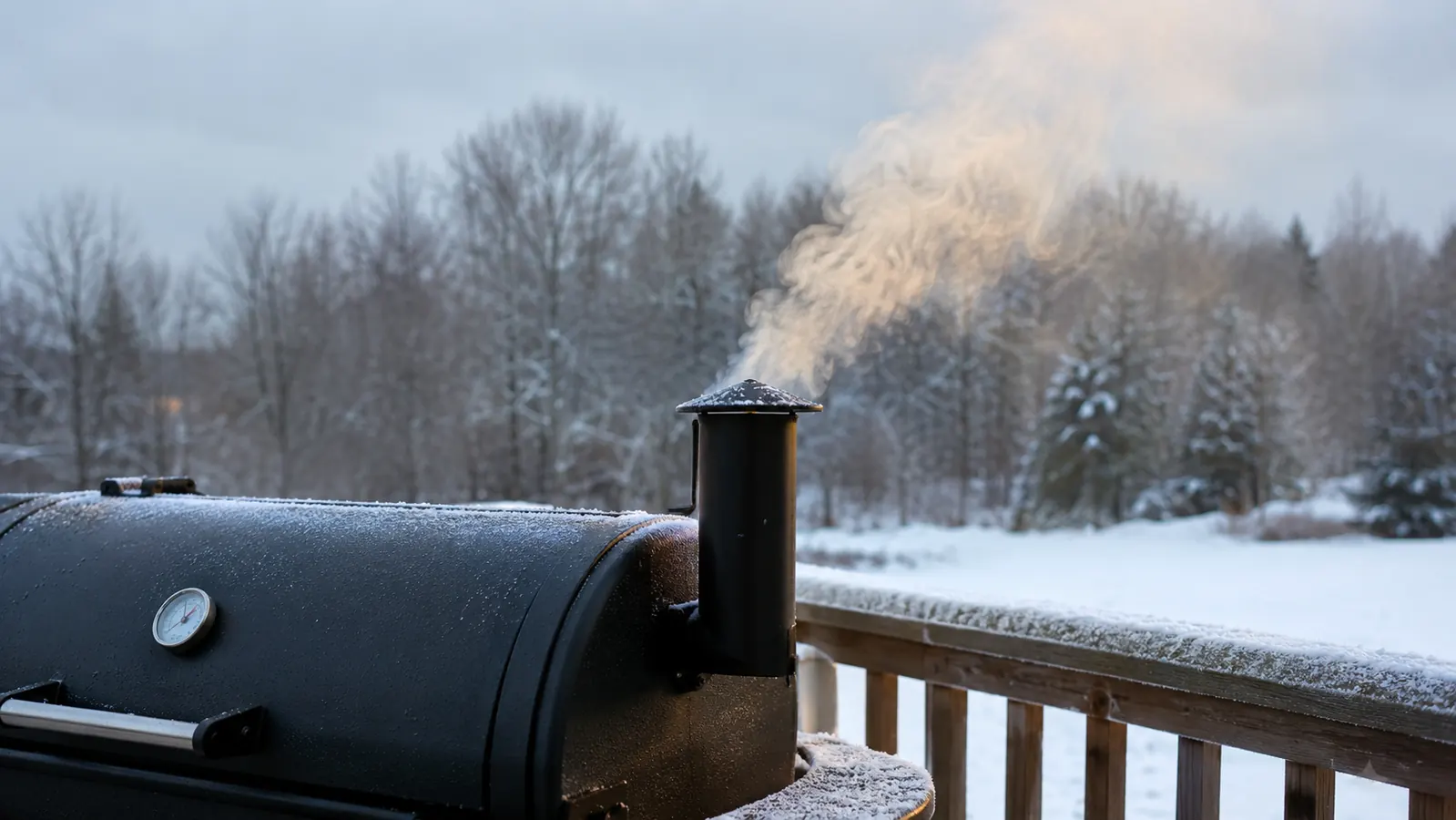
The biggest mistake I made my first winter was putting meat on as soon as the controller announced it had reached temperature. In the cold, the controller overshoots and undershoots for the first twenty minutes, because the steel around it is sitting at 20 degrees and it is trying to hold a 225-degree chamber. If you put a cold brisket in during that window, you are fighting two variables at once and you will lose both. Now I set the temperature, close the lid, and walk inside. I watch the smoke through the kitchen window, not the needle on the display. When the smoke settles into a thin, pale blue line, the fire is stable, and that is the moment the meat goes on.
This costs you nothing but patience, and it tells you whether the controller is healthy before you commit a nine-pound piece of meat. On a windless 20-degree day, my smoker settles at about 220 and holds there for hours. On a windy day it fights, and I know going in that I will check it more often. Knowing the baseline of your own unit is half the battle. Write down what it does on a calm day, and you will recognize the difference when something is actually wrong.
Step 3: Put a blanket on the cooking chamber and a windbreak on the windward side
Heat loss is the enemy in the cold. Every gust of wind pulls heat out of the chamber, the controller calls for more pellets, and you get a hot, hungry fire that burns through fuel and makes the smoke sharp and bitter. A smoker blanket, or an old welding blanket cut to size and held on with magnets, cuts the cycle time between pellet feeds and keeps the temperature far flatter. I use an insulated blanket from an auto parts store, draped over the chamber and held with binder clips. It does not touch the vents. I leave the top vent and both side vents fully clear, because a blanket that covers the vents just suffocates the fire and makes everything worse.
The windbreak matters just as much. My patio faces the open yard, so I park a folding plywood panel on the windward side, about two feet from the smoker, and low enough that it does not trap smoke under the lid. On the worst days I turn the whole smoker so the intake is out of the wind. The difference between a smoker in a gale and a smoker in still air is the difference between a steady 225 and a sawtooth line on the temperature chart. It is the single biggest improvement I have made to winter cooks.
Step 4: Expect the first 30 minutes to run hot, and do not chase it
When it is cold, the firepot starts with a big charge of pellets and the controller burns hot until the chamber catches up. So on a cold day you will see the temperature spike past your target for the first half hour, sometimes 30 degrees over. If you chase it by opening the lid or cranking the setting down, you make it worse, because every open lid dumps the heat you just built. I learned this the hard way on a cook the week before Thanksgiving, when I opened the lid four times in the first hour and turned a smooth start into a roller coaster. The bark set late, the cook ran long, and dinner was an hour behind schedule.
The fix is to trust the cycle. Let it run hot for the first thirty minutes, let the smoke thin out, and it settles on its own. If it is still running hot after forty minutes, then you have a real problem, usually a dirty firepot or a stuck auger, and that takes you back to Step 1. But nine cooks out of ten, the spike is normal and it corrects itself. Give the machine the twenty minutes to find its rhythm before you decide it is broken.
Step 5: Keep the lid closed and run a low smoke setting for the first two hours
Cold weather makes you want to peek. Do not. Every peek costs ten minutes of recovery, and it lets the thin smoke out and the cold air in. For the first two hours I run the smoke setting on low and I do not open the lid at all. The low setting feeds pellets at a steady, even rate, which is exactly what you want when the chamber is cold. A high smoke setting in cold weather just produces a thick, white, bitter smoke that coats the meat and tastes like the bottom of a campfire. It looks impressive in the yard and it ruins the brisket.
After two hours, once the bark has set and the meat is well into the cook, you can bump the smoke up if you want more color. But the first two hours are where the flavor locks in, and that is the window to keep clean and steady. On days below freezing, I pull the meat off when it reaches about 165, wrap it in butcher paper, and finish it in the oven at 275. The smoker has already done its job by then, and the oven holds a flat temperature without burning a single pellet. I have done this on every cold cook for three winters, and the results are better than fighting the wind all night.
What Else Helps
Two things I learned that no manual tells you. First, keep the hopper full of dry pellets and close the hopper lid the moment you pour. A hopper left open on a damp winter day turns the bottom inch of pellets into sawdust, and sawdust burns hot and fast and throws the whole feed rate off. I use Bear Mountain hickory year round, and I keep a bungee cord on my hopper lid because the factory latch is weak. Second, do not trust the smoker's built-in probe in the cold. The reading drifts when the probe wire is cold, and a cold wire reads low, which makes you chase a temperature that is not real. I use a leave-in probe with a wireless receiver that sits on the kitchen counter, and for the last two hours of any winter cook I go by that reading, not the smoker's display.
One more habit that helped me: I keep a log of every cold cook, just a few lines in a spiral notebook. Date, outside temperature, wind, what I did differently, and how the cook came out. After two winters I could look back and see that the cooks where I let the smoker warm up for a full twenty minutes were the cooks that held a steady temperature all day. That notebook has been worth more to me than any thermometer I own.
The difference between a smoker in a gale and a smoker in still air is the difference between a steady 225 and a sawtooth line on the chart.
None of this is complicated, and none of it costs much. A shop vac, a blanket, a plywood panel, and a rule about not opening the lid. Add the twenty minutes of warm-up patience and you can run a pellet smoker through a Michigan January the same way you run it in June. The pellets do their part if you do yours. I have had more consistent results from a routine that costs almost nothing than from any expensive gadget, and I would rather spend my winter Saturdays cooking than standing in the snow.
One Bag of Pellets That Won't Fight You
I keep coming back to Bear Mountain hickory because it burns even and it does not clog my auger in the cold. If you are fighting a winter cook, start with the routine above and a fresh, dry bag. Check today's price on Amazon.
Amazon Check Today's Price on Amazon →