
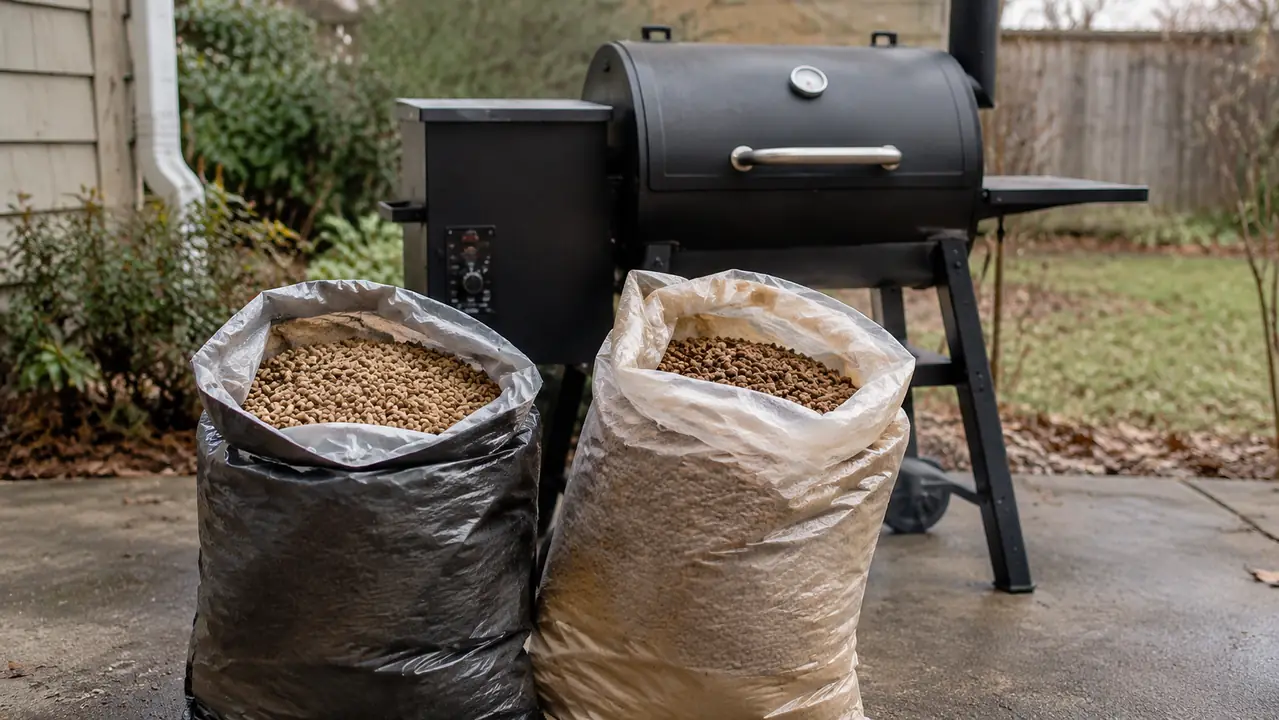
Hickory is the pellet everybody starts with and the one most people get wrong. I have been burning it in a mid size pellet smoker for four years now, on a concrete patio behind a ranch house in Grand Rapids, and the two bags that keep coming back to my shed are Bear Mountain and CookinPellets. They are both hardwood, they are both sold as hickory, and they burn nothing alike. I bought both in the same month two summers ago because I was tired of guessing, and I have been running them side by side ever since on the same smoker, the same cuts and the same thermometer.
This is not a lab test. It is what happened on my patio over about two years, roughly forty long cooks between the two of them, mostly pork shoulder and beef ribs with a fair number of chicken thighs and one Thanksgiving turkey that I would rather not talk about. What follows is where Bear Mountain won, where it lost, and why it is still the bag I reach for when I am restocking on a Friday afternoon with company coming Saturday.
| Bear Mountain Hickory | CookinPellets Hickory | |
|---|---|---|
| Ash after a long cook | Moderate, cleanout every three or four cooks | Noticeably less, cleanout every five or six |
| Smoke flavor | Balanced hickory, forgiving on long cooks | Stronger and sharper, easy to overdo |
| Pellet length | Fairly consistent, some short pieces | Very consistent |
| Fines and dust in the bag | Some at the bottom | Very little |
| Feed reliability in my auger | No jams in two years | No jams in two years |
| Bag and handling | Heavy paper bag, tears if you drag it | Sturdier bag, easier to reseal |
| Cold weather burn | Steady down to the low twenties | Steady, slightly faster burn rate |
| Finding it when you are out | Stocked almost everywhere near me | Usually have to order and wait |
| Best for | Regular weekend cooks who want dependable hickory on hand | Cooks who want the cleanest burn and plan ahead |
How I Tested Them
Nothing fancy. Same smoker, a mid size pellet unit I bought used four years ago, cleaned out completely between the two brands so I was not burning a mix. I ran each bag through at least a dozen cooks before I formed an opinion, because the first cook on a new pellet always tastes like a new pellet and that means nothing. I kept the same target temperatures, two twenty five for shoulders and ribs, two seventy five for poultry, and I measured internal temperature with a digital probe rather than going by time or by color. Marlene got the same question after every cook, which was whether it tasted like too much smoke, and she is honest to a fault about that.
I also weighed what I loaded and what was left, which is the part most comparisons skip. Thirty years in a tool and die shop leaves you unable to eyeball anything you could measure instead. Burn rate matters because it tells you whether a bag that seems to cost less is actually lasting you fewer cooks, and it turned out the two were close enough that it never decided anything for me. Where they genuinely differed was ash, flavor and what the bag itself is like to live with in a shed through a Michigan winter.
The turkey is worth telling because it taught me the most. Thanksgiving two years ago I put a fourteen pound bird on at two seventy five over a hopper of the stronger hickory, because I had it open and I was not thinking. Four hours later the skin was the color of a saddle and the breast tasted like a campfire. Nobody said anything, which is how you know. The same bird the following year, same smoker, same temperature, on Bear Mountain instead, came out tasting like turkey that had been near a fire rather than in one. That single comparison did more to settle this for me than all the weighing.
I also ran a few cooks where I deliberately did the wrong thing, because a pellet that only works when you are careful is not much use on a Saturday with people in the yard. I let the smoker run twenty five degrees hot for a stretch, I opened the lid more than I should have, and once I let the hopper get down near empty on a windy afternoon. Both pellets handled the abuse about equally. Neither one produced the acrid, oily smoke you get from a bag that has taken on moisture, which is the failure I was actually watching for.

Ash Is the Thing You Notice First
CookinPellets wins this one and it is not particularly close. Running long cooks back to back, I was vacuuming the fire pot and the bottom of the barrel every third or fourth cook on Bear Mountain, and I could stretch that to five or six on CookinPellets before the ash started to pile up around the burn pot. If you have ever had a pellet smoker stumble at hour nine of a brisket because ash choked the fire pot, you know that is not a cosmetic complaint. It is the difference between a cook you babysit and a cook you trust.
What I will say in Bear Mountain's defense is that the ash it does make is fine and light and comes out with a shop vacuum in about two minutes. It is not the gritty, clinkered stuff I have gotten from cheaper bags that have filler in them. So the tradeoff is honest, you clean more often but cleaning is quick. If you are the kind of cook who does one long smoke a month, you will probably never notice the difference between these two bags. If you cook most weekends through the summer, you will notice it by August.
To put an actual number on it, a twelve hour shoulder on Bear Mountain leaves me somewhere around a cup and a half of ash in the bottom of the barrel. The same cook on the other bag leaves closer to a cup, sometimes a little under. That gap sounds small written down, and across a single cook it is. It compounds though, and by the third or fourth long cook the pile around the fire pot on Bear Mountain is tall enough that I stop trusting it and go get the vacuum. On CookinPellets I have gone five long cooks and still had to talk myself into cleaning it.
Smoke Flavor, and Where Hickory Gets Away From You
This is where Bear Mountain earns its place in my shed. CookinPellets hickory is stronger, and on a short cook that is a real advantage, chicken thighs in an hour pick up more character than they do on Bear Mountain. But hickory is a bully. On a twelve hour pork shoulder that same strength keeps building, and I have pulled shoulders off CookinPellets that tasted like the inside of a chimney. Not ruined exactly, but the pork was gone and all that was left was smoke. Nobody asked for seconds.
Bear Mountain runs milder and rounder, and on a long cook that is the more forgiving pellet. The shoulder still tastes like hickory, but it tastes like pork first. If you are new to a pellet smoker and you are still learning how long is too long, that forgiveness is worth more than any spec on the bag. Experienced cooks who want to drive the flavor hard, and who are willing to pull the meat earlier or wrap sooner, will probably prefer the CookinPellets. I am not trying to win a competition on my patio. I am trying to feed eight people who show up at four.
Pellet Consistency and What Comes Out of the Bag
Pour both bags into a bucket and the difference shows immediately. CookinPellets are uniform, nearly all the same length, with very little dust at the bottom of the bag. Bear Mountain has more variation, a fair number of short pieces, and enough fines at the bottom that I stopped dumping the last couple of inches straight into the hopper. I sift it now, which takes about thirty seconds and is not a hardship, but it is a step CookinPellets never asked of me.
Now for the part that surprised me. In two years and something like forty cooks, neither pellet has jammed my auger once. Not once. I went into this expecting the dustier bag to cause a feed problem and it simply did not, at least not in my smoker. Your auger may be fussier than mine, and if you have had jams before, the more uniform pellet is the safer bet. But I am not going to invent a problem I did not have. The fines are a housekeeping annoyance for me, not a reliability one.
Restocking hickory before the weekend?
Bear Mountain hickory is the bag I keep on hand because it is forgiving on long cooks and I can always find it. Check today's price on Amazon and see what it looks like against what you are burning now.
Amazon Check Today's Price on Amazon →
Cold Weather, Storage and the Michigan Problem
Pellets and moisture are enemies, and a Michigan shed in March is a humidity experiment. This is the one place where the bag itself matters. The CookinPellets bag is sturdier and easier to fold over and reseal. Bear Mountain comes in a heavy paper bag that will tear if you drag it across a concrete floor, which I have done, twice. Both brands go into a sealed bucket with a gasket lid the day I bring them home now, and once they are in the bucket the bag stops mattering. If you are the sort who leaves a bag open in a garage, buy the sturdier one, or better yet buy a bucket.
Burning in the cold is a different question and Bear Mountain held up fine. I have run it down into the low twenties with snow on the smoker lid and the temperature stayed where I set it, allowing for the longer warmup any pellet unit needs when it is that cold. CookinPellets burned slightly faster in the cold in my unit, which meant refilling the hopper sooner on an overnight. Neither of those is a defect. It is just something to know before you start a brisket at ten at night in February with a hopper you assumed would last.
What Neither Pellet Will Fix
Both of these bags are real hardwood and both of them burn clean, so if your food is coming out bitter the pellet is probably not your problem. In my experience it is almost always one of three things. The fire pot is full of ash and the burn has gone smoky and inefficient. The smoker is running colder than the controller says, which on a used unit is common and is worth checking with an independent probe rather than trusting the display. Or the meat simply sat in smoke longer than it needed to, which is the hickory problem I described earlier and which no brand of pellet will save you from.
The other thing neither one fixes is a cold, wet start. On a January morning my smoker takes the better part of twenty five minutes to come up to temperature and settle, and during that stretch the smoke is thicker and dirtier than it will be an hour later. I do not put meat on until it settles and the smoke thins out and turns from white to nearly invisible. Cooks who skip that wait blame the pellets. It is not the pellets, and swapping brands to chase it will cost money and change nothing.
Which One I Keep Buying
Bear Mountain, and the reason is availability as much as flavor. When I run out on a Friday and people are coming Saturday, I can drive fifteen minutes and come home with a bag. CookinPellets usually means ordering and waiting, and a pellet that is better in the hopper is worth nothing when the hopper is empty. Add the gentler flavor on long cooks, which is most of what I do, and it is the bag that fits how I actually cook rather than how I imagined I would cook when I bought the smoker.
If you smoke less often, chase the cleanest possible burn, and plan your buying ahead, CookinPellets is a genuinely better pellet on ash and consistency and I am not going to pretend otherwise. That is a real recommendation, not a hedge. But for a weekend cook who wants dependable hickory in the shed and does not want to think about it, Bear Mountain is the one I keep buying, and after four years on this smoker I have stopped shopping around.
Get the Bear Mountain hickory
If you want a hickory pellet that is forgiving on a long cook and easy to restock when you run out, this is the one I keep in the shed. See today's price on Amazon and read what other backyard cooks are saying.
Amazon See Today's Price on Amazon →