
Last spring I loaded the hopper on my mid-size pellet smoker with a fresh 40-pound bag of Bear Mountain hickory pellets and told myself I would keep notes all season. I did, mostly. This is what I learned. The short version: they burn clean, they smoke consistently, and hickory from this company tastes like hickory is supposed to taste, which is to say it is not shy. The longer version involves a January brisket, a 14-degree afternoon, and one bag that sat in my garage through a wet week and paid for it. I'll get to all of it.
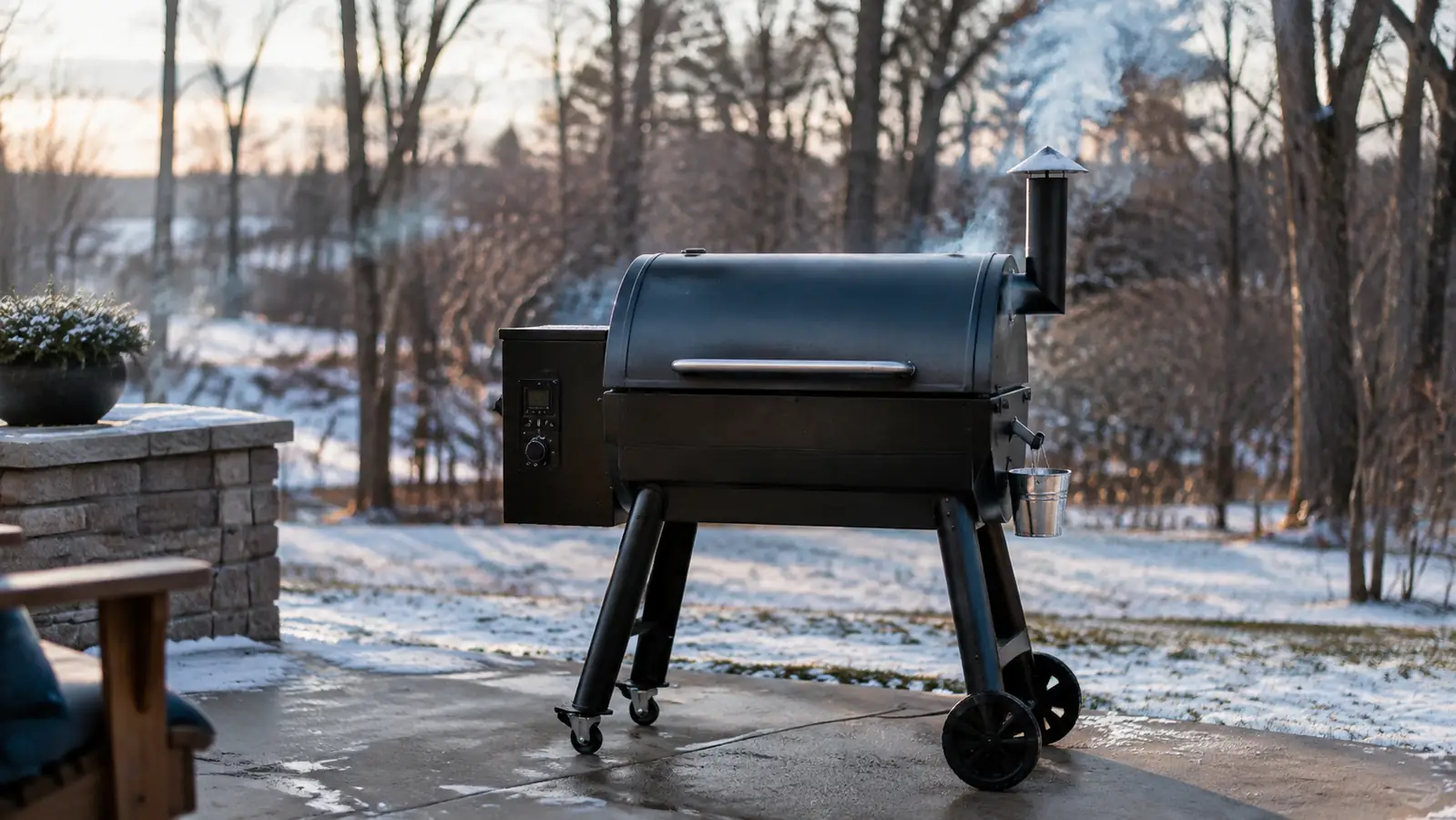
To set the scene: I am not a competition cook and I do not pretend to be one. I am a retired machinist in Grand Rapids who cooks for his wife, his grown kids when they visit, and whatever neighbors wander over on a Saturday. My smoker is a mid-size pellet unit I bought used four years ago. It sits on a concrete patio behind a 1960s ranch house, open to Michigan weather. That means it gets rained on, baked, and buried in snow. If a pellet holds up here, it will hold up most places. I ran Bear Mountain hickory through that smoker from April to January, which is roughly 40 cooks if you count the short weekday racks of ribs and the long weekend briskets.
The Quick Verdict
A 40-pound bag of hickory that burns clean, smokes steady, and lasts most of a season. Not the cheapest pellets you can buy, and the fines at the bottom of the bag are real, but it is the most consistent bag I have run in four years of pellet smoking.
Amazon Check Today's Price →One bag got me through three months of weekend cooks
If you smoke once a week like I do, the 40-pound bag is the size that makes sense. Check today's price on Amazon and see what a season of hickory costs.
Amazon Check Today's Price on Amazon →How I've Used It
I used the bag the way I use any pellet: poured it straight into the hopper, set the smoker to 225, and let the auger do the work. No sifting, no special handling, no mixing it with another wood. The first cook was a rack of spare ribs in early April. I trimmed them, rubbed them with salt and pepper and a little brown sugar, and put them on at noon. They came off at six, and the smoke ring was as even as anything I have gotten from a charcoal fire. That first cook set the pattern for the season.
Through the summer I used it for everything: pork shoulders for the Fourth, a couple of whole chickens, a chuck roast I treated like a poor man's brisket, and more racks of ribs than I counted. The smoker ran at a steady temperature with these pellets. I kept the controller at 225 for most cooks and it sat there. On a hot July day it would climb a few degrees if I had the lid open too long, but that is the smoker, not the fuel.
The real test came in January. I put a 14-pound brisket on at 10:30 on a night when the forecast said 12 degrees and the wind was coming off the lake. The pellet smoker sat on the open patio, no blanket, no wind break, because that is how I cook. It held 240 for fourteen hours. I woke up twice in the night to check on it, and both times the fire was clean and the temperature was where I left it. That is the cold-weather test, and Bear Mountain passed it.

What's Actually in the Bag
Bear Mountain makes the case that these are 100 percent hickory, no fillers, no binding agents, no mystery wood blended in to cut cost. I cannot verify that in a lab, but I can tell you what the smoke smells like. Hickory has a sharp, bacon-like character that you notice immediately. When I ran a cheaper blend last year, the smoke was thin and sweet, and I could never quite tell what I was smelling. With Bear Mountain, there is no question. The smell alone tells you what is in the hopper.
The pellets themselves are uniform. I dumped the bag out on a tarp once, just to see what I was working with. Almost every pellet was the same length, with only a light dusting of fines in the bottom. That matters more than people think. Fines are basically sawdust. They feed through the auger unevenly, they clog the firepot, and they burn dirty. The cheap bag I used before this one had a solid inch of dust at the bottom, and I fought flameouts all summer. Bear Mountain's bag had maybe a quarter-inch of fines, which I poured straight into the firepot and burned without trouble.
One honest note on the bag itself. It is a heavy paper bag, 40 pounds when full, and it does not love being moved around. I drag it across the concrete rather than lift it. And if you leave it in a damp garage for a week, the pellets at the bottom will clump. I learned that in October when a bag sat in a corner after a stretch of rain. The clumped pellets broke apart easily enough in my hands, but it is worth knowing: keep the bag dry and it behaves. Let it sit wet and you will fight it.
How They Burn in Cold Weather
Michigan winters are the reason I have opinions about pellet fuel. From November through March, my smoker sits in snow for weeks at a time. I still use it, because brisket does not take a holiday. The cheap pellets I started with four years ago would struggle below 20 degrees. The fire would flicker, the temperature would swing twenty degrees, and I would stand out there in the dark with a flashlight, wondering if I should have just used the kettle.
Bear Mountain burned differently. The first cold cook was a pork shoulder in late November, 28 degrees and a light snow falling. The smoker settled at 230 and stayed there. The second was the January brisket I mentioned, and the third was a pan of mac and cheese I ran at 275 while the kids were over for New Year's. Three cold cooks, three steady temperatures. I am not going to tell you the pellets generate heat on their own, because they do not. The smoker does that. But the pellets feed consistently in the cold, and a consistent fire is what keeps the temperature steady.
Ash is the other cold-weather issue. Pellet smokers produce ash no matter what you burn, and in the winter it tends to build up faster because you run the smoker longer to hold temperature. After the January brisket I vacuumed the firepot and found maybe a coffee cup of fine gray ash. That is a normal amount for a fourteen-hour cook. The cheaper bag I used last winter left clinkers, hard fused lumps of ash that plugged the grate and took a chisel to remove. Bear Mountain left none.
Fourteen hours in 12-degree weather, no blanket on the smoker, and Bear Mountain never let the temperature wander.
What Hickory Actually Does to the Meat
Here is the thing about hickory that nobody says in the product listing: it is bossy. Hickory is one of the strongest smoking woods there is. It is why people use it on pork and beef, and it is why you should think twice before you dump a full hopper of it under a chicken or a piece of fish. On the ribs and shoulders I cooked this season, the hickory flavor was present but not harsh. It tasted the way bacon smells. On the chickens, I pulled them off a little early and the skin still had a bitterness that I did not love.
My fix, and it is a simple one: mix the hopper. For poultry I ran about two-thirds Bear Mountain hickory with a third of a milder fruit wood, and that smoothed the edge right off. For pork and beef I ran it straight, full hickory, and the result was exactly what I wanted. A pork shoulder that went on at midnight and came off at noon the next day had a crust that tasted like a campfire in the best way, and the meat underneath was still tender and moist. That is the balance you are paying for with a pure hickory pellet.
One more observation, and it is about volume. A 40-pound bag of Bear Mountain hickory lasted me from April to mid-June, which covered the ribs, two pork shoulders, a chuck roast, and three weekend cooks of chicken. That works out to a little over a pound and a half of pellets per hour at 225. Your smoker will differ depending on how well it is sealed and how cold it is outside, but that number gives you a way to plan. If you cook once a week, one bag is roughly a season of hickory.

Where They Fall Short
No review is honest without the complaints, so here are mine. The first is the fines. They are minor compared to the cheap bag I used before, but they are not zero. If you pour the last few cups from the bottom of the bag into the hopper without looking, you will get a dirty burn for the first twenty minutes. I learned to stop short of the bottom and dump what is left into the kettle instead, where it lights fine as kindling.
The second complaint is the single-flavor problem. If you buy hickory, you get hickory. There is no dial for the smoke level. When I wanted something lighter, I had to buy a second bag of a different wood and mix them myself. That is not a defect in the product, it is the nature of the category, but it is worth saying plainly because the listing does not. The third complaint is the bag itself. Forty pounds of pellets in a paper sack is awkward, and there is no good handle to grab when you want to tip it into the hopper. I pour from a five-gallon bucket I keep next to the smoker, and that works, but it is an extra step.
And one thing I want to be straight about: I do not think Bear Mountain is the only good pellet on the market. It is the best bag I have run in this smoker, but "best for me" and "best for everyone" are different sentences. If you are happy with the pellets you are using and the food is coming out the way you want, there is no reason to switch. I am not here to talk you out of a working setup.
Alternatives I Considered
I compared Bear Mountain against two other options this season: CookinPellets and the store brand at my local hardware store. There is a full side-by-side comparison on this site if you want the details, but the short version is this. The store brand cost less and burned fine in July, but it fell apart in the cold and left clinkers in the firepot. CookinPellets is a premium product, 100 percent hickory like Bear Mountain, and it is the closest competitor I have tried. It burned clean and the flavor was excellent. The difference came down to consistency and availability. Bear Mountain held its temperature more steadily in my smoker, and I can buy it without a special order.
For most people, I would say the difference between Bear Mountain and CookinPellets is not worth losing sleep over. Both are good. But if you cook in a cold climate, or you want a pellet that feeds evenly through a long cook, Bear Mountain earned the top spot in my hopper. I will also say this: the ratings on the listing, 4.6 stars across more than fourteen thousand reviews, match my experience. That many people cannot all be wrong about a bag of sawdust, and neither am I.
What I Liked
- Burns clean and steady in cold weather, held 240 through a 14-degree January night
- Uniform pellets with minimal fines at the bottom of the bag
- Pure hickory flavor that tastes the way hickory is supposed to taste
- One 40-pound bag covered roughly a season of weekend cooks
Where It Falls Short
- Fines at the bottom of the bag, minor but real
- Single-flavor bag means you mix woods yourself for milder smoke
- 40-pound paper bag is awkward to handle, especially in cold weather
- If the bag gets damp, the pellets at the bottom clump
Who This Is For
Buy a bag of Bear Mountain hickory if you smoke pork or beef most weekends and you want a pellet you can set and forget. Buy it if you cook through the winter and your smoker lives outside, because the cold-weather performance is where this bag earns its keep. Buy it if you are tired of flameouts and clinkers and you want to know the fuel is not the problem. And buy it if you like a pronounced smoke flavor, the kind that makes the neighbors wander over and ask what is on the grill. That is the crowd this bag is for, and I am in it.
Who Should Skip It
Skip it if you mostly smoke chicken and fish, because straight hickory will fight you. Buy a milder wood or plan to mix the hopper. Skip it if you smoke twice a year and the 40-pound bag would sit in your garage for months, because moisture will get into it and the bottom will clump. And skip it if you are happy with what you are burning. This is not a bag that will transform your barbecue. It is a bag of wood pellets that does its job without drama, which is exactly what I want from a bag of wood pellets.
The bag that earned a permanent spot in my hopper
I ran two seasons of cooks on Bear Mountain hickory and it never gave me a reason to switch back. Check today's price on Amazon and see if it fits how you cook.
Amazon Check Today's Price on Amazon →