
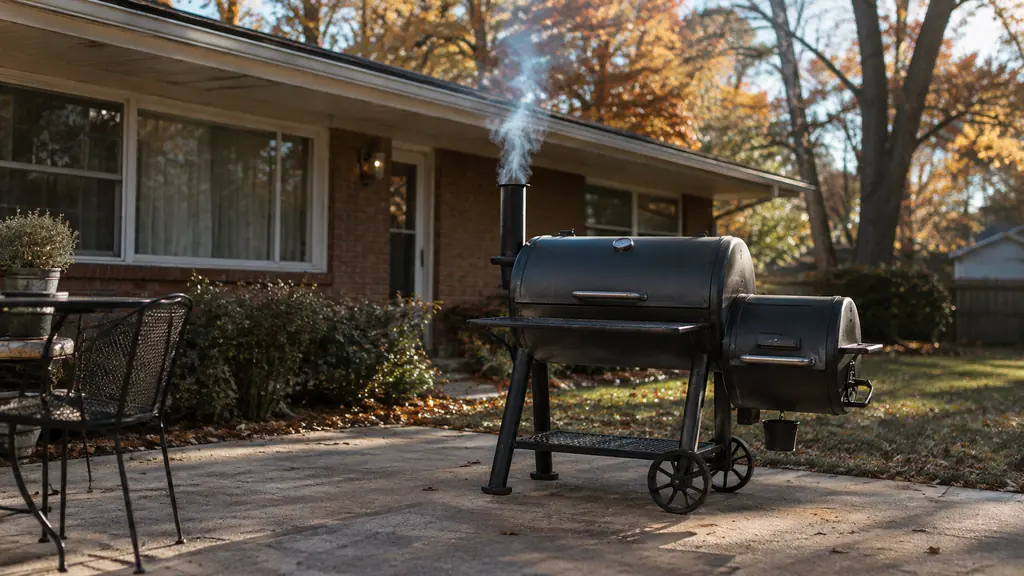
I bought my first bag of Bear Mountain hickory pellets on a Tuesday in late April, mostly because the brand name kept showing up in the pellet aisle at the hardware store and I was tired of guessing. The smoker I run is a mid-size pellet unit I picked up used four years ago from a guy in Jenison, and it has eaten every brand of pellet the local stores stock. Some of them burned fine and tasted like nothing. Some of them threw more ash than smoke. A couple of them jammed the auger on a cold morning. So when I opened this bag, I did what I do with anything that claims to be better: I weighed it, I smelled it, I ran a full cook with it, and I wrote down what happened.
This is the honest version of those notes. Not a spec sheet, not a marketing page. I am a retired tool-and-die machinist, I have cooked on a concrete patio behind a 1960s ranch house on the northeast side of Grand Rapids for years, and I do not get excited about grill gear anymore. I get interested. There is a difference. What follows is what two years and roughly forty cooks with this pellet taught me, including the parts the label does not mention.
The Quick Verdict
A clean-burning hickory pellet with real smoke flavor and honest drawbacks. It leaves more ash than the premium brands, the bottom of the bag is full of dust, and the flavor is measured rather than loud. For long pork and brisket cooks, it has been the most consistent pellet I have run in four years.
Amazon Check Today's Price →The pellet that made my smoker predictable again
After two years and forty cooks in Michigan weather, Bear Mountain hickory is the bag I reach for when the cook actually matters. If you want the same consistency, check today's price on Amazon and see how it compares to your local hardware store.
Amazon Check Today's Price on Amazon →How I've Used It
The smoker is a mid-size pellet unit with a digital controller and a hopper that holds most of a full bag. I bought it used four years ago, and I have run somewhere north of a hundred bags through it since. My normal week is one cook on the weekend, sometimes two when the kids come over with their families. That means a brisket or a pork shoulder on Saturday, maybe chicken or a rack of ribs on Sunday, and the smoker sits idle from Monday to Friday under a cover that is honestly past its prime.
With Bear Mountain I have run the full range. Nine-hour brisket cooks. A twelve-pound pork shoulder that went thirteen hours because I was not about to rush it. Ribs at 225, chicken at 275, and a couple of meatloaves on a rainy Sunday when Marlene asked for something different. The bag I am finishing now was opened the first week of June, and it has been through rain, a stretch of ninety-degree days, and one night in late October when the temperature dropped to thirty-four and the wind was coming straight off Lake Michigan.
I keep a spiral notebook in the hopper lid. Every cook gets a page: what I loaded, what the weather did, what the meat looked like at the stall, what the fire pot looked like when I cleaned it. That notebook is where this review comes from. I trust it more than my memory, because my memory likes to smooth over the bad cooks and blame the equipment.
What Nobody Tells You About the Ash
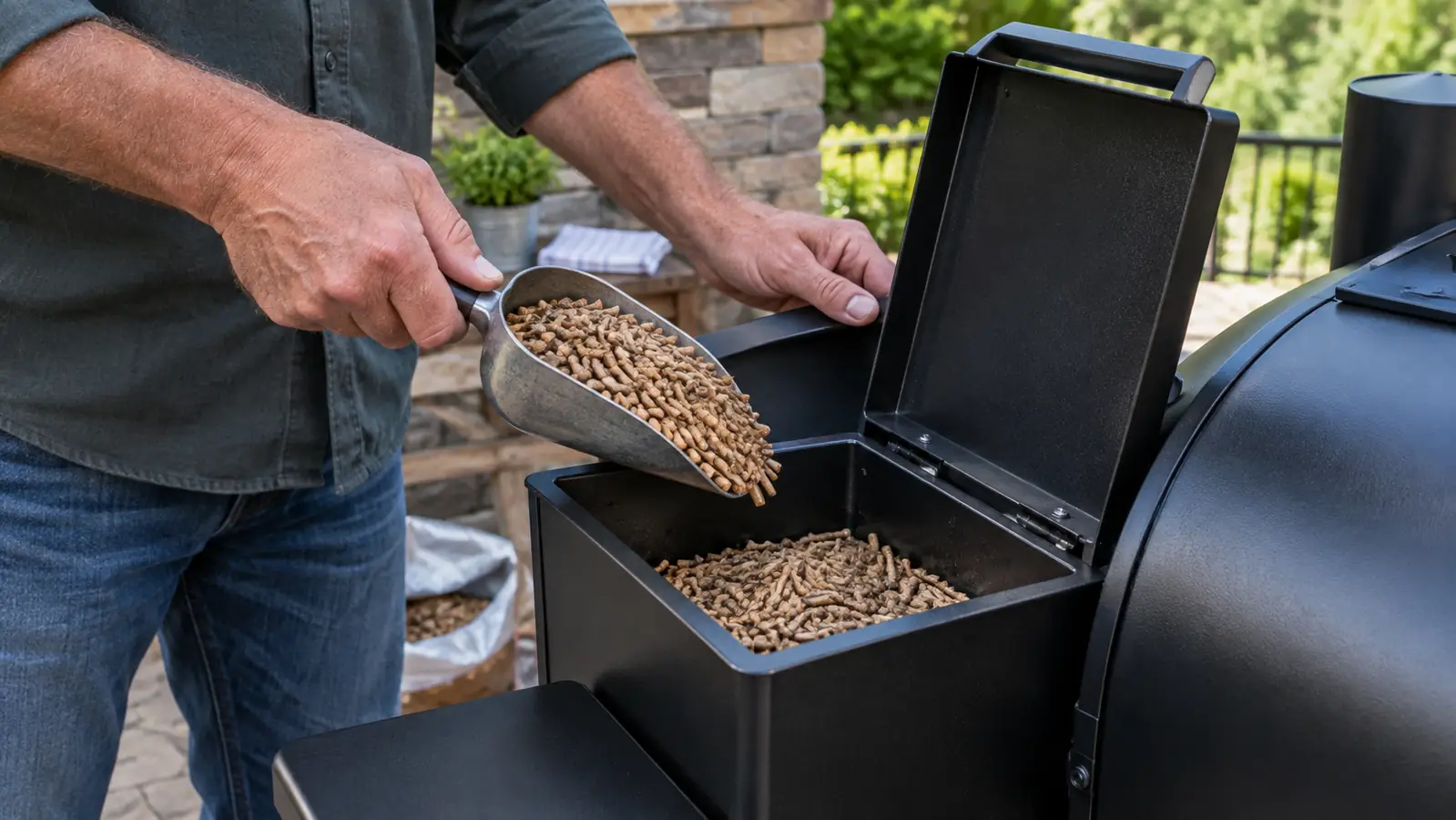
Here is the first thing the label does not tell you: these pellets make ash. More ash than the expensive brands, and about the same as the mid-range brands. After a six-hour cook on a Sunday in July, I scooped a coffee can three-quarters full of fine gray ash out of the fire pot. I weighed the ash once, out of curiosity, and it came to just over a pound and a half from a nine-hour cook. That is the kind of number the marketing materials leave out. That is not a dealbreaker, but it is a fact, and it means you will clean the fire pot more often than you would with a bag that costs twice as much.
The ash matters more in a small smoker than in a big one. My fire pot is roughly the size of a soup can, and when the ash builds up past a certain level it blocks the igniter rod, and the auger has to push fresh pellets through a pile of ash. That is how you get a flameout at hour four of a brisket. I learned that the hard way two winters ago with a different brand, a bag that burned hot and left a fire pot full of clinkers. It is why I check the fire pot before every long cook now, no matter what is in the hopper.
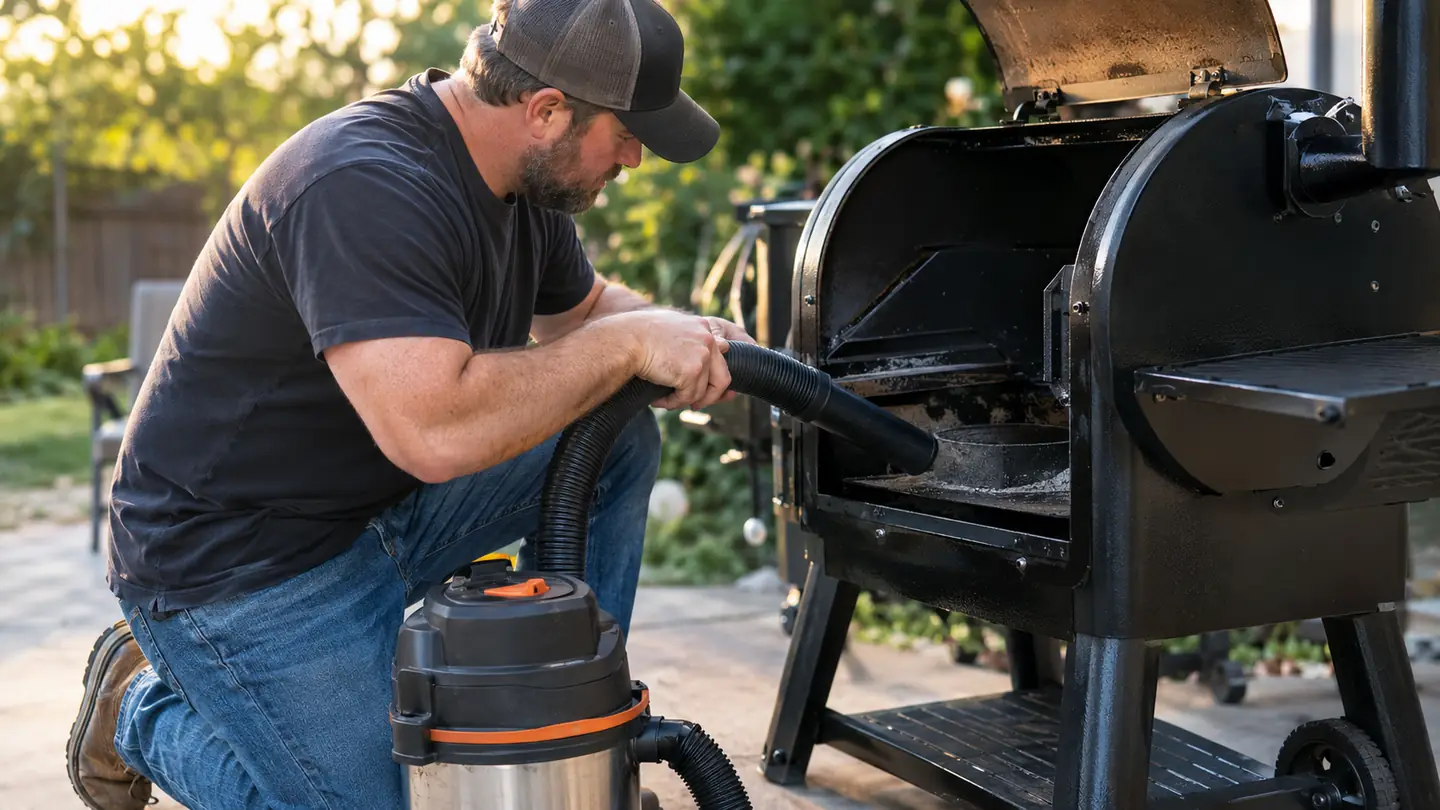
With Bear Mountain I have had exactly one flameout in two years, and that was on a night in October when the wind was gusting hard enough to make the controller struggle. I do not blame the pellet for that one. But I do plan for the ash. On a long cook I run the smoker a little hotter for the last hour, which burns the fire pot cleaner, and I vacuum the pot out with a shop vac before I load the next cook. That routine has worked all season, and it takes ten minutes.
The ash also tells you something about how the pellet burns. A clean, light gray ash means the wood is burning completely. A dark, clumpy ash means the burn is too cool and the smoke is going to taste bitter. Bear Mountain leaves a light gray ash, which is the sign of a clean burn. That is the part I did not expect from a mid-priced bag.
After a nine-hour brisket cook I scooped a coffee can three-quarters full of ash out of the fire pot, and I still reached for the same bag the next weekend.
The Smoke Flavor Is the Real Story
The ash is the thing people complain about. The flavor is the thing they stay for. Hickory is a strong wood, and a lot of hickory pellets taste like they are trying to prove it. Bear Mountain's hickory is more measured. It gives you a clean, sweet smoke that gets into a pork shoulder without turning it bitter. The first time I ran it, I did a pork butt for the neighbors and nobody asked what I had changed. They just ate more, and one of them asked for the recipe, which I do not actually have.
The difference shows up on long cooks. At the nine-hour mark, cheap hickory pellets can leave a sooty note on the bark, especially when the smoker is running at 225 and barely smoldering. Bear Mountain held clean through the whole cook. The bark on that brisket was dark, dry, and tasted like smoke instead of ash. My son-in-law, who does not hand out compliments, said it was the best brisket I had made on the pellet smoker, and then he asked if I had finally figured out the controller. That is his way of being nice.
It is not a bold smoke. If you want a pellet that hits like a stick burner, this is not it, and no pellet is. What it is, is consistent. The same bag behaves the same way from the first scoop to the last, which is more than I can say for the store brand I used to buy. That consistency is worth more to me than a stronger flavor, because a stronger flavor that shows up every third cook is not a flavor, it is a surprise.
What a Bag Actually Delivers
The bag says 40 pounds. What you actually get is closer to 38, because the bottom two pounds are fines, the dust that settles during shipping and handling. Every bag of pellets has fines. Bear Mountain has fewer than the cheap brands and more than the premium ones. I pour the bag into a five-gallon bucket and sift the dust out before I load the hopper. That takes five minutes, and it keeps the auger from grinding dust instead of pellets.
A 40-pound bag lasts me about four weekend cooks, sometimes five if I am doing short chicken cooks instead of brisket. That is the honest math, and it is the number that matters more than the price on the bag. When I compare it to the cheaper store brand, I am not comparing dollars. I am comparing how many cooks I get before the bag is gone, how much ash I have to clean, and whether the meat comes out the way I wanted. The store brand was cheaper per bag, but I used more of it to get the same smoke, so the gap closed faster than the sticker price suggested. On that math, Bear Mountain lands in the middle. It costs more than the store brand and less than the premium brands, and it delivers a cleaner cook than the cheap stuff.
One thing I will say for the cheaper bags: they are not all bad. The store brand hickory I used before this one was fine for chicken and ribs, where the cook is short and the smoke does not have time to go bitter. It fell apart on brisket. Bear Mountain has not fallen apart on anything yet. Whether the difference is worth the extra money is a question only you can answer, but I know which bag I reach for on Saturday morning.
How It Handles a Michigan Winter
The pellet aisle changes in November. The big bags disappear, the hardware store stocks whatever it can get, and the smoker has to work harder to hold temperature. I ran Bear Mountain through one full winter, from the first snow in November to the last freeze in April. On a twenty-degree night, the smoker holds 225 with the controller set at 225, but it burns through pellets faster, maybe a third more over a long cook. That is true of every pellet I have tried. What matters is whether the auger keeps feeding.
The cold does two things to a pellet. It makes the wood more brittle, so the auger crushes more of it into dust, and it adds moisture if the bag is not sealed. Bear Mountain held up better than the store brand in both ways. The pellets stayed whole in the hopper, and the auger did not grind them into sawdust. I cannot give you a scientific measurement, but I can tell you that I did not have a single auger jam all winter, and I had two the winter before with the cheap bags.
The one cold-weather complaint I have is the fines. When a bag sits in a cold truck and then comes into a warm garage, the moisture makes the dust clump. I had one bag in February that had a solid chunk of fines in the bottom, about the size of a softball. It broke apart in my hands and sifted fine, but it was a reminder that this is a paper bag full of sawdust, and it wants to be stored dry.
Where It Falls Short
The ash is the big one, and I am not going to soften it. If you cook once a week, you will clean the fire pot every two or three cooks. That is a ten-minute job with a shop vac, but it is a job, and the premium brands genuinely reduce it. I have run bags of the expensive stuff that left barely a dusting in the fire pot. Bear Mountain is not that. You will know you cooked with it.
The fines are the second thing. Two pounds of dust out of a forty-pound bag is not a scandal, but it is annoying, and it is worse when you buy online and the bag gets tossed around in delivery. The bag itself is paper, which is fine until it gets wet. I keep mine in a galvanized trash can on the patio, because a wet paper bag of pellets turns into a solid block of sawdust, and a solid block of sawdust does not feed through an auger. I learned that with a different brand, but the lesson applies here too.
And the flavor, while consistent, is not the strongest hickory on the shelf. Some people want a pellet that tastes like a campfire. This one tastes like a clean fire, and if you want the smoke to be the loudest thing on the plate, you will want a more aggressive brand. I have run a bag of a premium brand that cost noticeably more and left almost no ash, and the flavor difference was real but not huge. Whether that difference is worth the money is the whole question, and I will not answer it for you.
What I Liked
- Clean, consistent hickory smoke that holds up on nine-hour cooks without turning bitter
- A 40-pound bag handles four to five weekend cooks, which is honest value for the money
- Burns predictably in a mid-size smoker, with one flameout in two years
- Fewer fines than the cheapest store brands, and they sift out in five minutes
- Survived a full Michigan winter without a single auger jam
Where It Falls Short
- Leaves noticeably more ash than premium pellets, so plan on cleaning the fire pot every two or three cooks
- Bottom of the bag is mostly dust, about two pounds lost to fines
- Paper bag falls apart if it gets wet, so plan on a storage bin
- Hickory flavor is measured, not aggressive, which will not satisfy everyone
Who This Is For
Bear Mountain hickory is for the cook who does a long pork or brisket cook most weekends and wants results he can count on. It is for the person who already owns a smoker, already knows how to clean a fire pot, and would rather spend ten minutes with a shop vac than gamble a Saturday on a bag of pellets that burns hot and tastes like nothing. I fit that description, and this is the bag I keep coming back to. If you fit it too, this is a solid, honest choice.
Who Should Skip It
Skip it if you cook short and hot, mostly chicken and burgers, because you will not taste the difference and you will still clean the ash. Skip it if you hate maintenance, because the premium brands really do leave less mess, and you are paying for that convenience. And skip it if you want a hickory flavor that punches you in the face. This is a workhorse pellet, not a showoff. It does its job quietly, and for the price of admission, that is exactly what it should be.
The same bag I reach for on Saturday morning
Two years and forty cooks later, Bear Mountain hickory is still the first bag I load. See what it costs today on Amazon, and decide for yourself whether the ash is worth the flavor.
Amazon Check Today's Price on Amazon →