
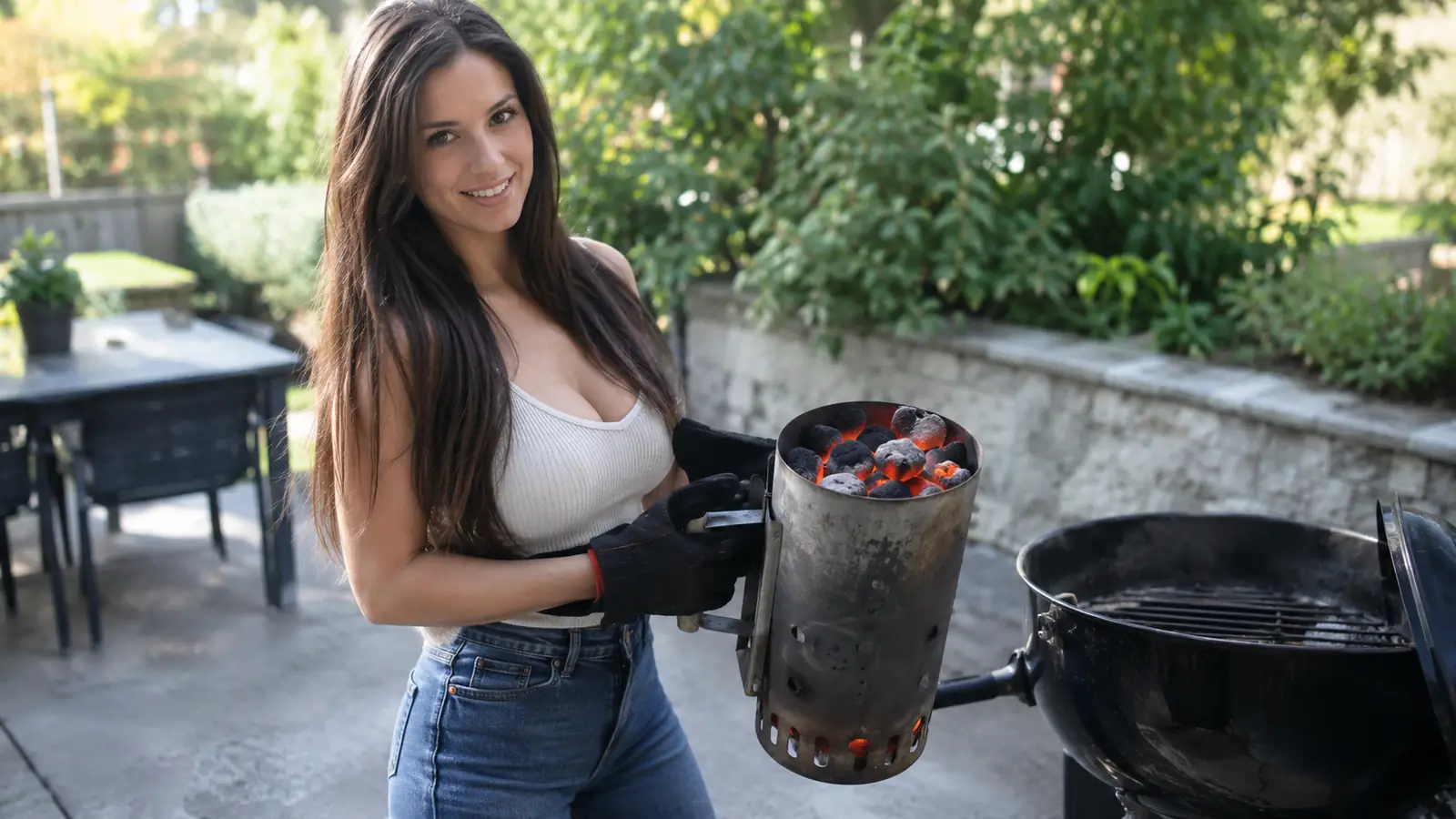
I've been grilling on a 22-inch charcoal kettle for eleven years now, and for the first three of those I used lighter fluid like everyone else. I'd squirt a puddle into the pile, wait ten minutes, light it, and then spend the next half hour fighting flare-ups and the smell. The day I threw the can away was the day I bought the Weber Rapidfire chimney starter. That was eight summers ago, and I haven't looked back.
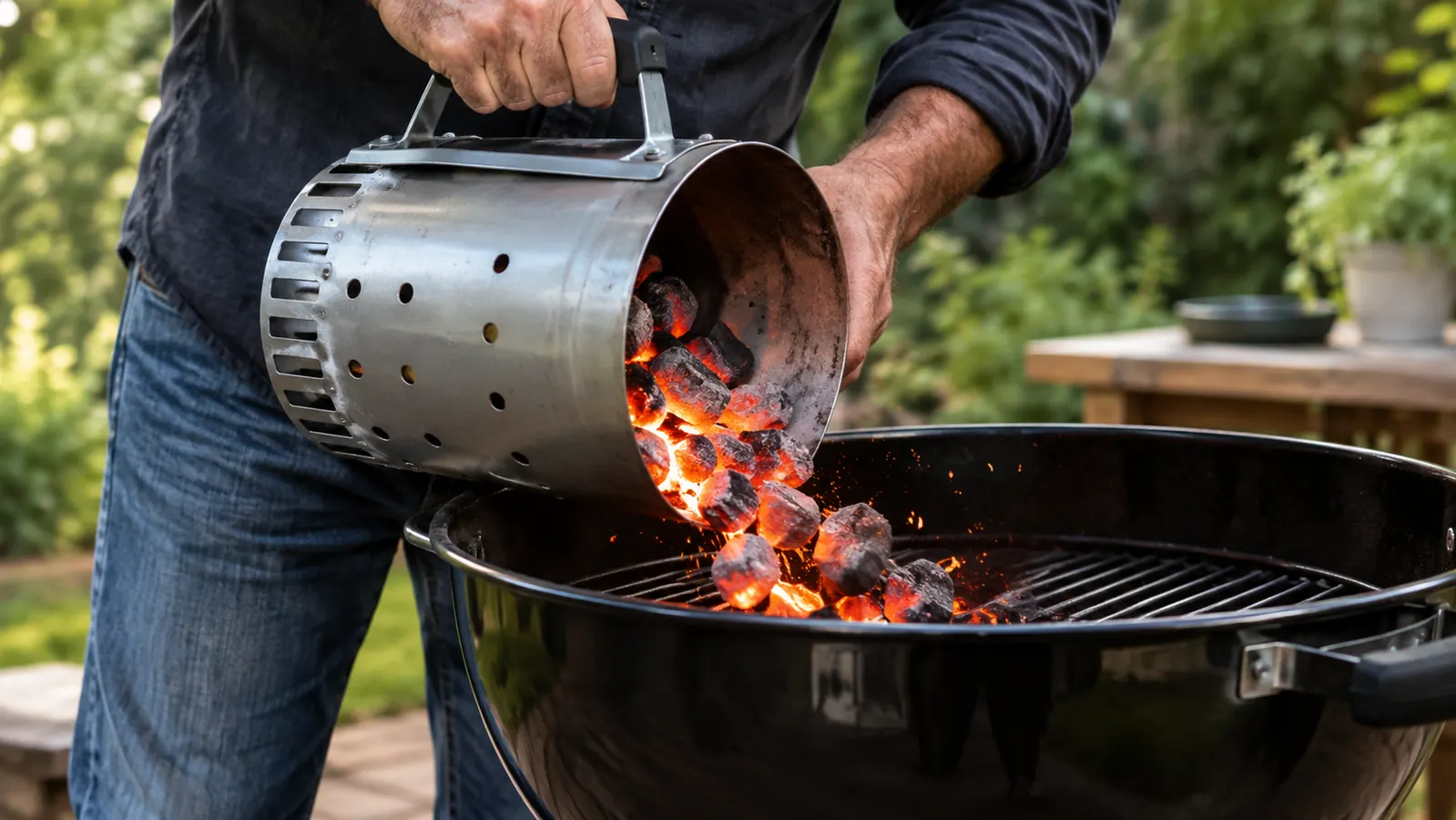
The chimney starter is not a complicated tool. It's a steel cylinder with a wire grate inside, a handle on the side, and a hole in the bottom. You crumple newspaper in the base, set the chimney on top, fill it with charcoal, and light the paper. The coals catch from below and burn up evenly. In ten to twelve minutes you have coals that are ready for anything. That sounds too simple to matter, but it changes every part of how you grill. Here are ten reasons I'm never going back to fluid.
The tool that replaced my lighter fluid
The Weber Rapidfire lights charcoal in about 12 minutes with nothing but newspaper, and it's built to survive a Michigan winter on the patio. I've had mine eight years and it still works like day one.
Amazon Check today's price on Amazon →No chemical taste on your food
The biggest reason I switched was taste. With lighter fluid, no matter how long you let it burn, there's always a hint of petroleum in the smoke. On a hot day, with the grill full of chicken, that smell gets into the meat. I noticed it most on burgers. I'd grill burgers for the neighbors and they'd say something was off. They couldn't name it, but I could. The Weber chimney starter burns from the bottom up, so the coals on top are clean by the time they're ready. No fluid to soak into them, no residue. The first time I used it, the burgers tasted like charcoal, not like gas. That was the moment I knew.
It lights faster in the wind
I grill on a patio open to the weather, and we get real wind in Grand Rapids. Lighter fluid would take fifteen minutes to get a pile of coals going, and in a gust it would die out and I'd have to relight. The chimney starter is a column, so the draft pulls air up through the coals. I measured it one afternoon: twelve minutes from the first match to coals covered in gray ash. The wind that used to kill my fluid fire actually helps the chimney draft. That's the difference between watching charcoal slowly catch and actually cooking.
It costs less over a season
A can of lighter fluid is cheap until you buy it every few weeks. I was going through a can a month in the summer, sometimes more when we had company. The chimney starter cost me about the same as two cans of fluid, and it's still sitting on the patio eight years later. No refills, no trips to the store, no cans to toss in the trash. If you grill every weekend like I do, it pays for itself in the first month. I stopped buying fluid the day I got the Weber, and I haven't missed it once.
No more oily puddles on the patio
Lighter fluid leaves a mess. It drips off the charcoal, pools on the concrete, and soaks into the mortar. By the end of a season my patio had dark stains that a pressure washer couldn't get out. The chimney starter makes no such mess. The only thing it leaves behind is a little ash, and that blows away. I used to spend an hour every spring scrubbing the patio with a wire brush and degreaser. Last spring I didn't have to. That's not a huge reason to switch, but it's the one my wife appreciated most.
Even heat, fewer flare-ups
When you use fluid, you get a chaotic fire. Some coals are white-hot, some are barely lit, and the grill has hot spots that char one side of a steak while the other stays raw. The chimney starter evens things out because the coals all burn together from the bottom up. By the time they're ready, they're all at the same temperature. That means I can sear a ribeye over direct heat without worrying about a flare-up torching the fat cap. I've cooked steaks that way for two years now, and I can count the bad sears on one hand.
Works in the cold
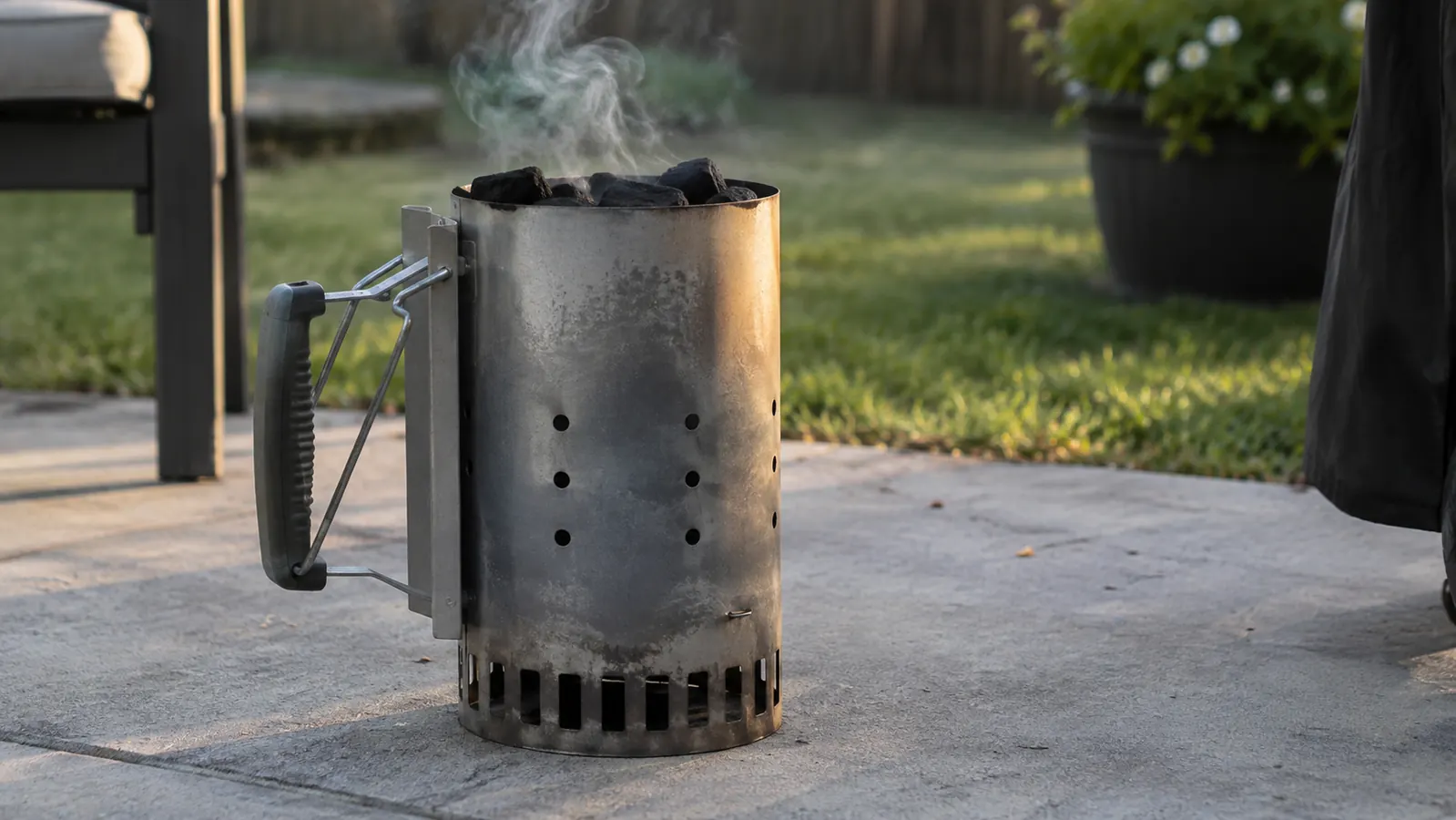
Michigan winters are not kind to grilling, but I use the charcoal kettle all year. Lighter fluid gets thick and sluggish when it's cold, and it doesn't want to light. The chimney starter doesn't care. I've used it when the temperature was ten degrees and the snow was blowing sideways. The newspaper catches, the draft pulls, and the coals are ready in twelve minutes. The handle gets cold, so I wear a glove, but the fire itself is the same as in July. If you grill through a northern winter, you'll understand why this matters.
No wasted charcoal
I used to over-pour fluid, and then half the coals would be soggy and wouldn't light. I'd end up with a pile of wasted briquettes at the bottom of the grill. The chimney starter uses exactly what you need. You fill it to the top, light it, and every coal catches. I found I was using less charcoal to get the same fire. Over a summer, that adds up. I get maybe two extra cooks out of a bag than I used to. It's not a huge savings, but it's a sign the method is more efficient.
Safer than a can of flammable liquid
Lighter fluid is dangerous in ways people don't think about. I had one flare-up where the flame ran up the stream while I was pouring. It singed my arm and scared me badly. The chimney starter removes liquid fuel from the equation entirely. There's nothing to spill, nothing to flash back, nothing to pour when you're distracted. You light a piece of newspaper with a match, and the fire stays where it belongs. I'm not a nervous person, but I'll take the chimney starter every time.
Better smoke flavor
The flavor you get from charcoal comes from the smoke of the coals themselves, not from the fuel you used to light them. With fluid, you're adding a layer of chemical smoke on top of the charcoal smoke. With a chimney starter, you get pure charcoal. I noticed it most on pork butts and whole chickens. The skin got a cleaner, more even color, and the meat had that sweet, clean smoke flavor that lighter fluid always muddied. My wife noticed it before I said anything. She asked what I'd changed. That's when I knew the switch was permanent.
It's built to last
The Weber Rapidfire is a simple piece of steel, and that's exactly why it survives. No plastic parts, no fancy mechanisms, no plastic handle that melts. I've left it out on the patio through three Michigan winters, through rain and snow and freezing temperatures, and the only sign of wear is a little rust on the handle. It still works as well as the day I bought it. I've had cheaper chimneys before, and they warped and fell apart within a season. This one is still going. If you buy it once, you won't buy another one for a long time.
What I'd Skip
If you're a weekend griller who uses gas most of the time and only fires up charcoal a few times a year, you can probably skip the chimney starter and stick with what you have. It's not a tool you need if you're not cooking over charcoal regularly. And if you're the kind of person who likes to experiment with wood chips and smoke boxes, you'll find the chimney starter only does one thing, and that's fine. It doesn't need to do more.
The first time I used the Weber, the burgers tasted like charcoal, not like gas. That was the moment I knew.
Ditch the fluid for good
The Weber Rapidfire chimney starter is the one tool I recommend to anyone who grills with charcoal. It's faster, cleaner, and the flavor is better. I've had mine eight years and it still works like day one.
Amazon Check today's price on Amazon →