
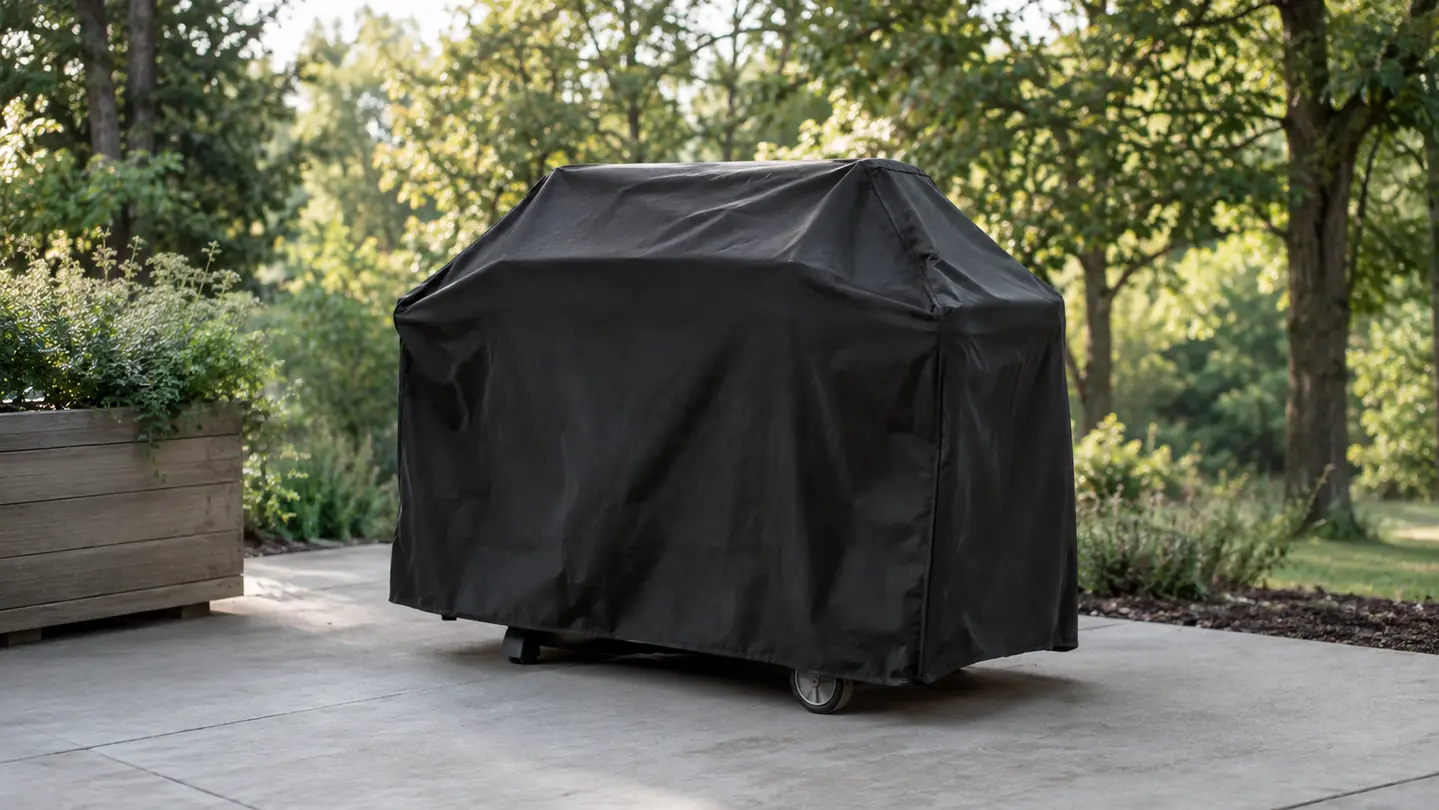
I have been cooking outside on the same concrete patio for eleven years, and in that time I have gone through a pile of grill covers. The cheap ones lasted one season. The mid priced ones made it two. When the NEXCOVER 60 inch cover showed up, I figured it would be another season or two before I wrote it off. Three years later it is still on the grill, and that is not because I treat it gently. It sits on a three burner propane grill that gets used most weeks, and it stays outside all year through Michigan snow, rain, and August sun. The cover has seen temperatures from minus ten to a hundred and five, and it has never cracked or warped. I am a retired tool and die machinist, so I notice seams and stitching. This review is the honest version, with the flaws included.
This is not a first week impression. I have had this cover through three winters and two full summers. The grill is a mid size three burner unit from a brand you will recognize, and the cover fits it like it was made for it. The elastic hem pulls tight around the base, and the two side straps keep it from flapping in the wind. I will get to the problems in a minute, but first let me tell you how it actually performs. I will tell you about the seam that split, the strap that broke, and the corner that faded first. If you are trying to decide whether this cover is worth the asking price, you want the version with the problems included.
The Quick Verdict
After three Michigan winters, the NEXCOVER holds up far better than anything else I have tried, but it is not bulletproof. The fabric stays waterproof, the fit is snug, and the price is fair for what lasts. The weak points are a seam that split at the top after two years and a strap buckle that gave up last spring. For a covered grill that lives outside year round, I would buy it again.
Amazon Check Today's Price →The NEXCOVER that survived three winters
Check today's price on Amazon and see if this is the cover that will finally end your cheap cover rotation.
Amazon Check Today's Price on Amazon →How I've Used It
The cover sits on my three burner propane grill, which is a mid size unit from a name brand you will recognize. I use the grill at least twice a week from April through October, and once or twice a week in the colder months when the temperature stays above twenty. The cover goes on every time the grill cools down. That means it gets lifted and replaced hundreds of times a season. I do not handle it with care. I yank it off with one hand while holding a plate in the other, and I fold it up in a heap on the patio when the grill is hot. The cover has taken that abuse without a tear, which is more than I can say for the vinyl cover I had before it.
The first thing you notice is the fit. It is not a baggy sheet. The NEXCOVER is cut to follow the shape of a standard three burner gas grill, with a little room for the side tables. The elastic hem pulls it tight around the base, and the two straps on the sides keep it from ballooning in the wind. I measured it against the grill before I put it on, and it covered the top of the lid with maybe two inches to spare. That snug fit is why the wind has never lifted it off, even in the March gusts we get here. I have seen neighbors' covers lying in the yard after a storm, and mine stays put.
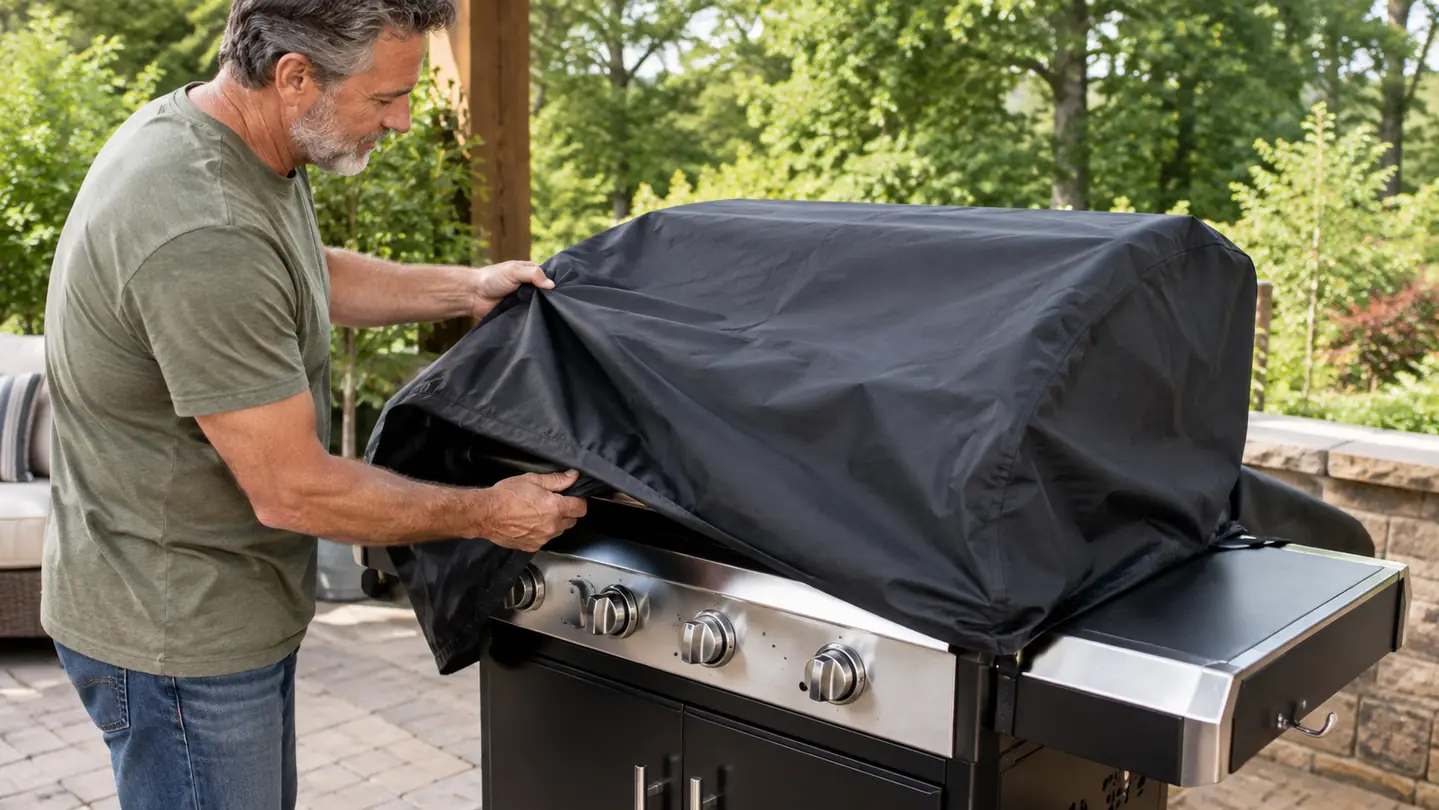
In three years I have had exactly one time when the cover came off in the wind, and that was my fault. I had not fastened the straps because I was in a hurry, and a storm blew through that night. The cover ended up in the corner of the yard, and the grill got a soaking. That is not a design flaw. Every cover I have owned would do the same. The difference is that the NEXCOVER has a real strap system, not a cheap toggle that snaps after a month. The straps are easy to reach, and I can click them shut with cold fingers, which matters when it is twenty degrees outside.
What the Seams Did
I want to start with the thing that went wrong, because that is the honest part. The top seam, the one that runs along the ridge of the lid, split open after about twenty months. It did not split all the way across. It opened up about six inches at the rear corner, where the fabric sees the most stress when you pull the cover off from the front. I noticed it in late fall when I went to put the cover on and saw a thin line of daylight through the seam. The stitching on the rest of the cover is still tight, so this was not a general quality problem.
I patched it with a piece of seam tape and a hot iron, and it has held for another year. The tape is not pretty, but it works. The rest of the seams are still tight, including the ones at the corners and along the bottom hem. The stitching on this cover is a step up from the covers I used before, which all had seams that pulled apart at the first hard winter. I think the split was more about the way I drag the cover off than about the cover itself. If you are gentle with yours, you may never see it. But if you are like me and you treat a cover like a work glove, this is the spot to watch.
Straps and the Wind
The strap system is two straps, one on each side, that wrap around the base and click into a plastic buckle. I have used those straps every single time I put the cover on, and for the first two years they were perfect. Last spring, one of the buckles snapped. Not the strap, the buckle. It was a cold morning, I was in a hurry, and I pulled a little too hard. The plastic broke at the hinge. The other buckle is still fine. The fix was simple. I threaded the strap through the loop and tied a knot, and that has worked fine ever since.
The elastic hem is doing most of the work anyway. The straps are a backup, not the main hold. I mention this because a lot of reviews on the internet will tell you the straps are flimsy. My experience is that they are fine for normal use, and the plastic buckle is the one part that will not survive a careless yank in cold weather. That is a fair trade for the price. I would rather replace a cheap plastic buckle every few years than deal with a cover that blows off in the first storm.
The Fade
The cover is a dark gray when it is new, and it does fade. After three summers of direct sun, the top of the lid is noticeably lighter than the sides. The color has gone from a rich gray to a washed out slate, and the difference is visible from across the yard. The fabric itself is still strong. The fade is cosmetic, not structural. You can feel the difference in the surface too. The top is a little rougher to the touch, but the waterproof coating is still working. I checked the inside and there is no sign of the coating flaking off.
I checked the waterproofing after a week of rain last fall. I ran my hand along the inside of the cover and it was dry. The grill underneath was dry too. The NEXCOVER has a coating that holds up better than the two cheaper covers I had before, which both started to leak through at the seams by the second season. This one has never leaked. The fade is the price you pay for leaving it in the sun. If you keep your grill under a porch or a pergola, you will not see it. If you park it in the open like I do, expect the top to lighten a shade every summer.
Cleaning and Winter
Cleaning is simple. A few times a year I take it down and wipe it with a damp cloth and a little dish soap. The bird droppings come off without a fight, and the grime from smoke washes away with a hose. I do not put it in the washing machine, because the instructions say not to, and I do not need to. The fabric does not hold on to stains the way the old covers did. A stiff brush takes care of the stubborn spots, and the cover dries fast in the sun.
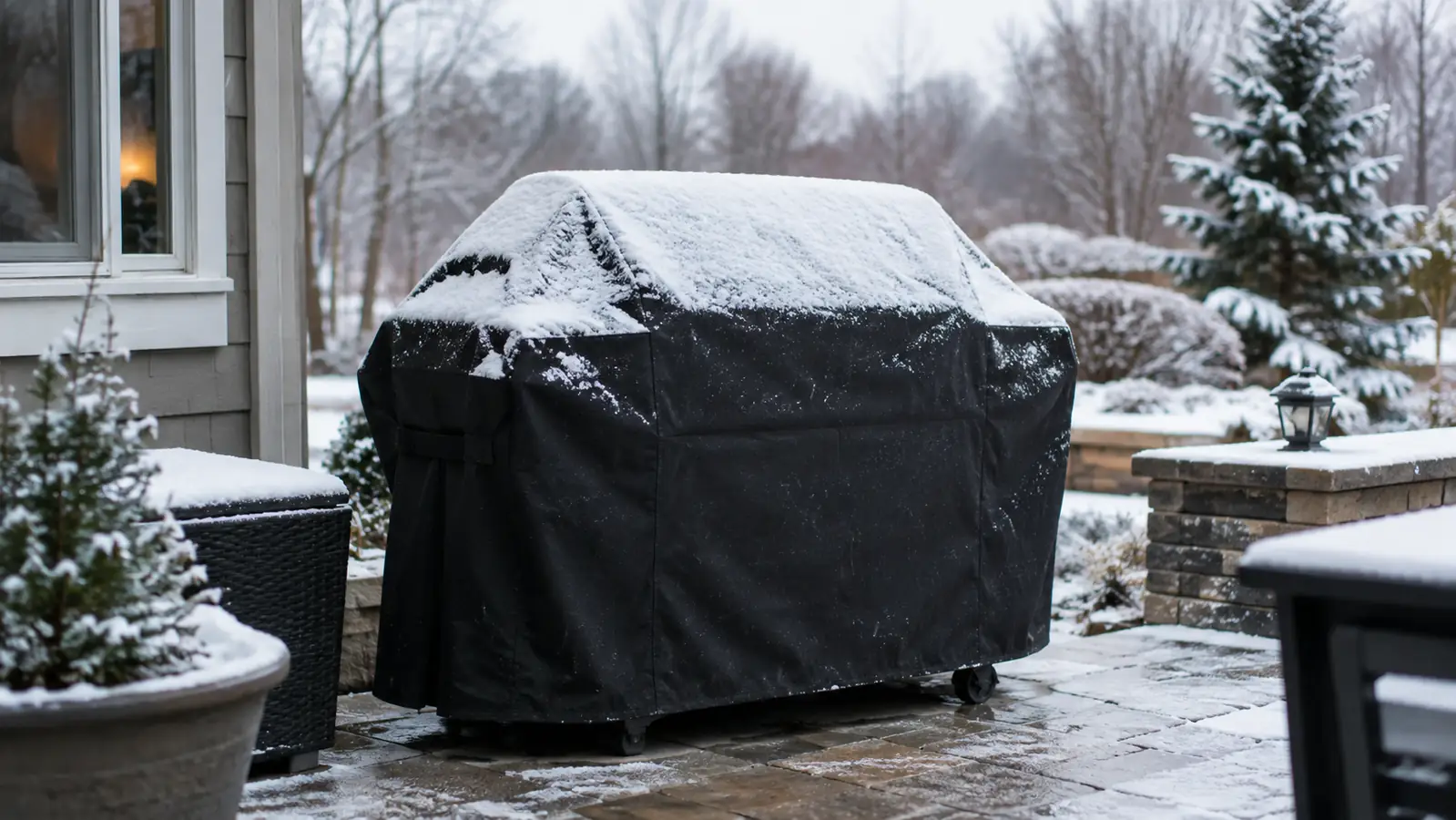
Winter is the real test. Snow sits on this cover for months at a time, and we get real snow, not the dusting you see on television. The cover does not freeze to the grill. When the snow melts, the water runs off instead of pooling on top. I have had ice on the straps and buckles, but a quick tap breaks it free. The fabric stays flexible in the cold, which is more than I can say for the vinyl covers I used in my twenties. Those turned into stiff boards at twenty degrees. This one stays pliable, so I can still get it off without a fight.
One thing I learned the hard way: do not fold the cover up while it is wet and leave it in a pile. I did that once in the spring, and when I pulled it out in June there was a patch of mildew on the inside. It washed off, but it took some scrubbing. The NEXCOVER does not have a special mildew treatment that makes it immune. It is a fabric cover, and fabric that stays damp will grow stuff. Dry it before you store it, and you will be fine. That is true for any cover in this category.
What I Would Change
If I could change one thing, it would be the buckle material. The plastic is fine when it is warm, but it gets brittle in the cold. A metal buckle, or a buckle with a thicker hinge, would make this cover nearly perfect. I would also add a third strap in the middle, because the two end straps leave the center of the cover a little loose on a windy day. Neither of these is a deal breaker. They are small annoyances on a cover that otherwise does exactly what I need.
The other thing I would change is the way the fabric feels after a few years. The top surface gets a little rough, like a well worn work shirt. It is not a problem, but it is a reminder that nothing lasts forever. The NEXCOVER is not a five year cover. It is a three to four year cover if you use it hard, and longer if you are careful. For the price, that is a fair deal. The cheap covers I bought before were lucky to make it through one winter.
One more thought on value. I have seen reviews that say this cover is overpriced compared to a tarp and bungee cords. A tarp does not fit, does not stay on, and does not have a hem that hugs the base. The NEXCOVER costs more than a tarp, but it saves you the frustration of chasing a flapping sheet every time the wind picks up. For me, the time I save not messing with a cover is worth the difference. That is the honest math.
What I Liked
- Survived three Michigan winters without leaking
- Snug fit that stays put in wind
- Fabric stays flexible in cold
- Easy to clean with a hose
- Good value for the lifespan
Where It Falls Short
- Top seam split after twenty months
- Plastic strap buckle broke in cold
- Color fades in direct sun
- Mildew can grow if stored wet
Three winters in, the NEXCOVER has leaked exactly zero drops, and the only real failure was a seam I patched in ten minutes.
Who This Is For
If you are the kind of person who leaves a grill out year round, who wants a cover that you can put on with one hand while holding a plate of burgers, and who does not want to think about the cover again for three or four years, this is the one. The NEXCOVER is built for someone who uses the grill most weeks, not for a showpiece. It does the job without demanding anything from you beyond a rinse now and then. If you live where winters are real, this cover is worth a look.
Who Should Skip It
If your grill is a small portable unit, this cover is too big and you will spend your time fighting the excess fabric. If you keep your grill under a covered porch, you can get away with a cheaper cover, because the sun and snow are what kill them. And if you are the sort who wants a cover that looks brand new after five years, the fade will bother you. This is a workhorse cover, not a fashion statement. Buy it for what it does, not for how it looks on the patio.
The NEXCOVER that earned its spot on my patio
If you want a cover that handles real winters without fuss, check today's price on Amazon and see if it fits your grill.
Amazon Check Today's Price on Amazon →