
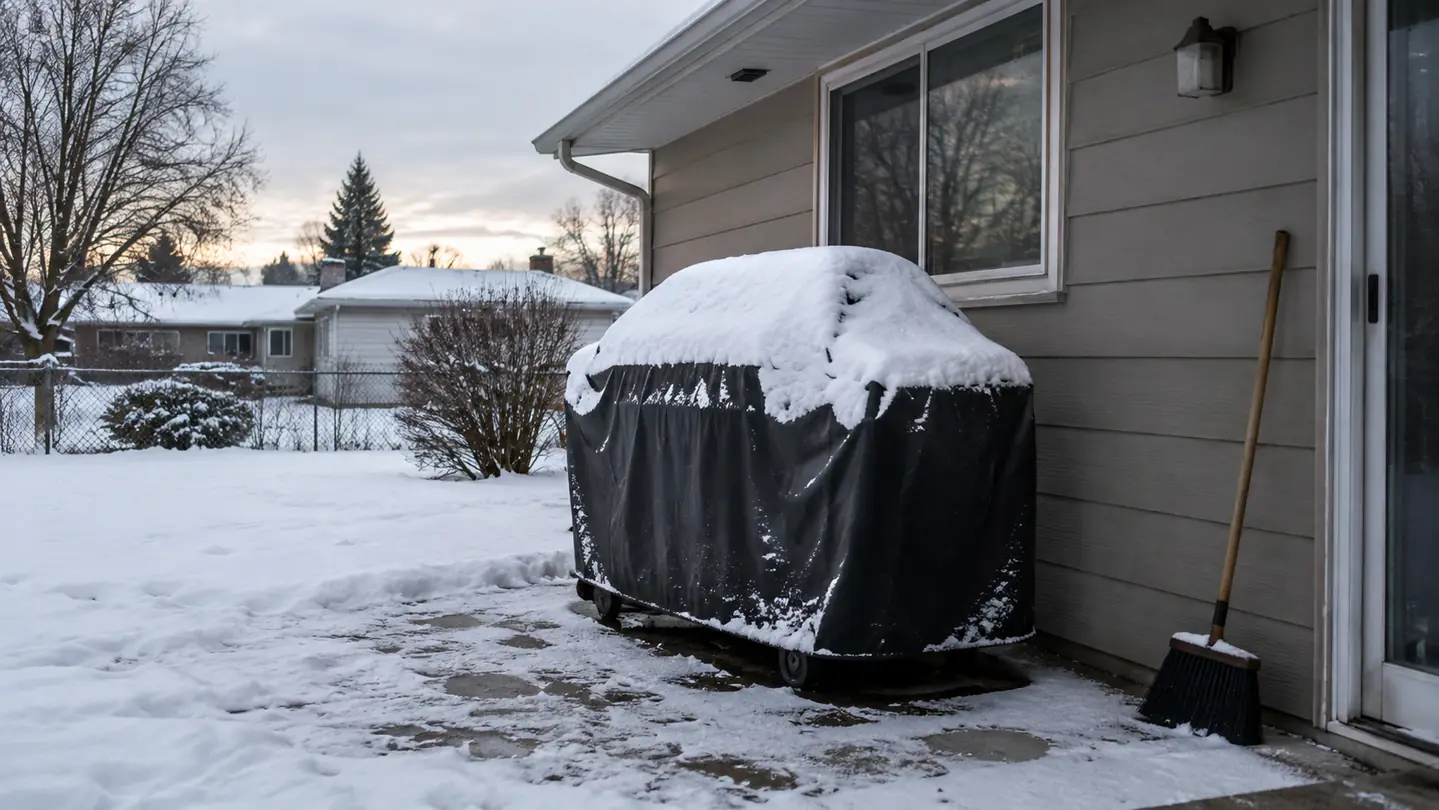
I have three grills sitting on an open concrete patio behind a 1960s ranch house on the northeast side of Grand Rapids. A 22-inch charcoal kettle I have owned for eleven years, a three-burner propane gas grill I use for weeknights, and a mid-size pellet smoker I bought used four years ago. Snow is on the ground from November through March most years, and the temperature swings from single digits to the mid-forties in the same week. That freeze-thaw cycle is what kills grills. The cold does not do it. The thawing does.
I learned that the hard way. The first winter in this house, I put a thin vinyl cover over the gas grill, the kind you grab off a peg at the hardware store. It split down the seam in January during a windstorm. By March the cart had a rust line along the bottom, the wheels were stiff, and the burner tubes looked like they had been through a war. I replaced that cover with a NEXCOVER 60 inch, and the difference was not subtle.
This is the routine I have used for three winters since. It is not complicated, and it does not take a weekend. It is mostly about cleaning, drying, and one piece of gear that does not quit. If you do these five things, your grill will look the same in April as it did in October. If you skip them, you will be shopping for a new cart by summer.
The order matters. Clean first, dry second, cover third. If you cover a dirty grill, you will uncover a worse one. If you cover a wet grill, you will uncover a rusted one. The cover is not magic. It is a roof. The rest of the work is yours.
The cover that got my gas grill through three Michigan winters
The NEXCOVER 60 inch cover is what I put on the gas grill every October. 600D fabric, taped seams, and a strap system that does not blow off in a January wind. It has outlasted every other cover I have owned.
Amazon Check Today's Price on Amazon →Step 1: Give the grill a real cleaning before it goes to sleep
A cover traps whatever is underneath it. If you wrap up a grill with a half inch of grease on the grates and a drip tray full of drippings, you are not protecting it. You are marinating it in moisture. Grease pulls water out of the air, and a Michigan winter has plenty of that. I have pulled covers off in March and found the inside of the lid dripping. That is the grease talking.
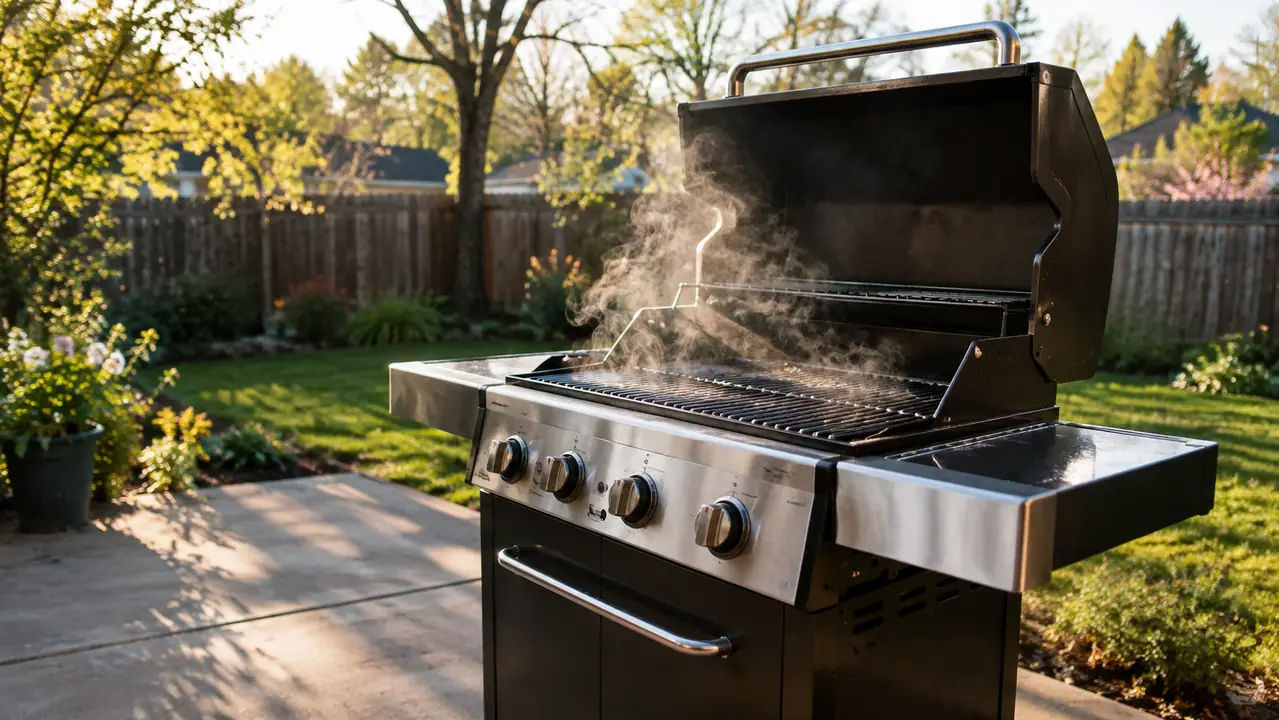
I do this on a dry weekend in late October or early November, when the forecast gives me two or three days without rain. I fire each grill up, brush the grates hot with a stiff wire brush, and scrape the flavorizer bars on the gas grill with a plastic scraper. On the kettle I pull the ash catcher and dump the ash into a metal bucket. On the pellet smoker I vacuum out the firebox and the burn pot with a shop vac. It takes about an hour per grill, and it is the step everybody skips. I know because I skipped it myself the first year.
The reason it matters is simple. Rust needs a surface to start on, and grease is that surface. A clean grate will sit all winter with nothing but a light film of surface rust, and that burns off on the first cook of spring. A greasy grate will pit, and pitting is permanent. I left the gas grill dirty one November and found the grates flaking in March. I have not done that again. And do not forget the little things: the thermometer on the lid, the handle, the hinge bolts. Grease on a hinge collects grit, and grit makes it stick. Thirty years in a machine shop taught me that a moving part that does not get cleaned will fail exactly when you need it.
Step 2: Empty the grease trap and decide what happens to the tank
The grease trap on my gas grill slides out from underneath. I line it with foil through the season, and when I clean the grill for winter I pull the foil out, wipe the tray down with a paper towel, and put it back empty. A tray full of frozen drippings will expand and crack the metal. Then you have a rust spot that never stops growing. I have seen that crack on a neighbor's grill, and it is not repairable. The whole tray has to be replaced, and the replacement is more trouble than the cover that would have prevented the problem.
The propane tank is its own question. I leave mine connected through the winter with the valve closed, because I grill year-round whenever the temperature gets above about twenty degrees. If you do not plan to cook at all, disconnect the tank and store it upright somewhere sheltered. A shed or a garage wall is fine. Do not bring it inside the house, and do not leave it where a kid can knock it over. A tank that falls over and snaps the valve is a problem you do not want in January. I keep mine on the grill, valve closed, and it has been fine for three winters.
One thing I stopped doing: leaving the valve open under the cover. The cover holds moisture against the regulator, and regulators rust from the inside out. A regulator that rusts will not deliver steady pressure, and a gas grill with a weak regulator is a grill that will not get hot. Close the valve. If the cover has a vent, make sure snow is not blocking it.
Step 3: Dry every surface before the cover goes on
Moisture is the whole game. A cover keeps rain and snow off, but if you put a cover on a wet grill, you have built a greenhouse. The water has nowhere to go. It sits against the metal for four months. That is how you get the rust line along the bottom edge of the lid. I have seen that line on a dozen grills in this neighborhood, always on the side that faces the prevailing wind. The wind drives the rain against that side, and the cover holds it there.
So I dry things deliberately. After I wash the grates and wipe down the inside, I leave the lids open for a couple of hours on a dry day. Then I wipe the outside down with an old towel, especially the seams and the corners where water collects. I do the same for the cart and the wheels. Then I shut the lids and leave the grill uncovered overnight, so any moisture I missed has a chance to evaporate. This sounds fussy, but it takes ten minutes, and it is the cheapest insurance you will ever buy for a piece of steel.
It is the difference between a grill that looks the same in April and one that has a rust line. My kettle is eleven years old and the outside is still the original paint. The inside is a different story, but the outside survived because I dry it before I cover it. Water finds the low spots. The corners, the seams, the bottom edge of the lid. If you dry those once in November, you do not have to deal with them in April.
Step 4: Put the cover on right and tie it down
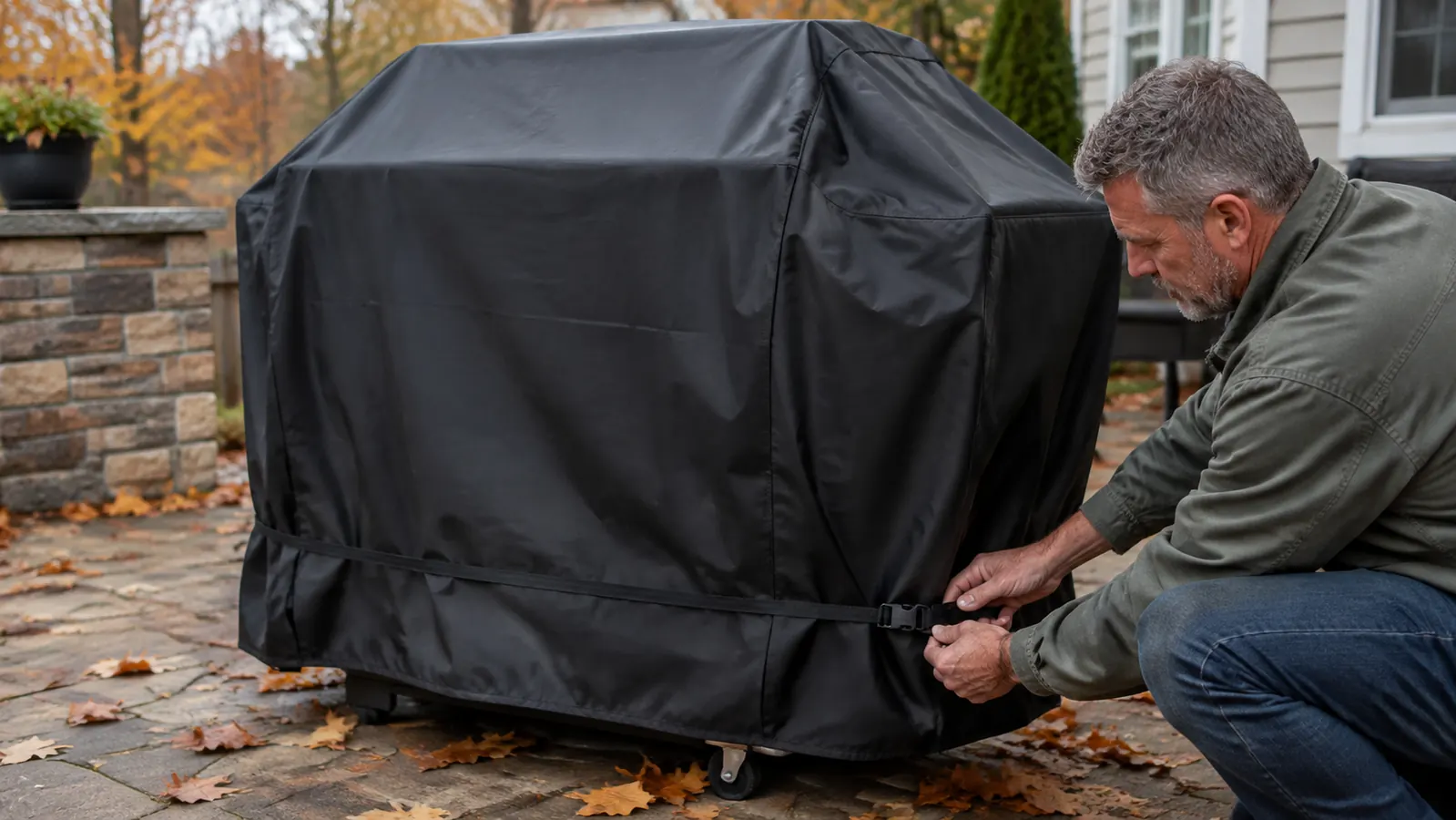
A cover that flaps in the wind is not a cover. It is a sail. The NEXCOVER 60 inch fits my three-burner gas grill with room to spare, and it has a strap system that cinches around the bottom. I buckle it tight enough that the cover does not move when I push on it. In a January wind, a loose cover will wear a hole in itself rubbing against a corner of the cart. I have patched covers that died that way. The patch is always on the same corner, the one that faces the prevailing wind off the lake.
Fit matters more than people think. A cover that is too small will stretch, split a seam, and let snow in through the top. A cover that is too big will pool water on top, and that pooled water freezes into a block of ice that drags the cover down and stretches the straps. The 60 inch size matches a standard three-burner gas grill. If your grill is bigger, measure the lid at its widest point and add a couple of inches. If it is a kettle, you can go smaller, but you still want the strap to reach.
I also position the cover so the vents are not buried under snow. The NEXCOVER has vents that let moisture escape, which matters more than people realize. A sealed cover traps condensation. A vented cover lets it out. The vinyl cover that split was sealed, and every sunny day in February, moisture condensed on the inside and dripped back onto the grill. That is the freeze-thaw cycle working against you from the inside.
Step 5: Check on the grill once a month and knock the snow off
A covered grill is not a forgotten grill. Once a month, usually on a mild day, I go out and look at the covers. I knock the snow off the top with a broom. A foot of wet snow can weigh more than a cover is rated for, and the weight will stretch the fabric and pull the buckles loose. I check that the straps are still tight and that the wind has not worked a corner free. It takes five minutes. I do it while I am taking out the trash, so it does not feel like a chore.
I also peek underneath once, just to confirm nothing has moved in. Mice have nested in worse places than a covered grill. If I see signs of anything, I deal with it in March. So far, with the NEXCOVER, I have not had to. The cover fits tight enough at the bottom that a mouse would have to work for it.
The payoff comes in April. When the snow finally goes, I take the cover off on a dry day, give the grill the same cleaning I gave it in November, and it is ready. The gas grill has been through three winters under a NEXCOVER cover. The paint is intact, the burners light clean, and the cart does not wobble. The kettle is eleven years old and still on its original wheels. That is the whole point of this routine. You do it once, right, and the grill outlasts the cover. The cover is the cheap part of the deal.
What Else Helps
A few things I do that are not strictly necessary but help. I put a scrap of plywood under the wheels of the gas grill so it does not sink into the mud during the spring thaw. I keep the kettle's bottom vent cracked a half inch so air moves through it all winter. I spray the hinges and the wheels with a dry lubricant, not oil, because oil collects dust and grit. And I close the valve on the propane tank before the cover goes on, every time. None of these takes more than five minutes, and they all solve problems I have actually had.
If you have a pellet smoker, pull the hopper lid and make sure no pellets are sitting in the auger tube before you cover it. Pellets absorb moisture and swell, and a swollen pellet will jam the auger. I vacuum the tube out every November. It takes two minutes and it saves you from taking the auger apart in April, which is a job you do not want with cold fingers.
One more thing. Do not store the cover on the grill in summer. Fold it and put it in a plastic bin in the garage. A cover that sits in the sun all summer will dry out and crack by the time you need it. Mine goes in a bin in May and comes out in October. That is part of why it has lasted.
Three winters on an open patio, and the paint on my gas grill is still intact. That is the whole test.
One cover, three winters, zero rust
The NEXCOVER 60 inch grill cover is the piece of gear that actually earns its spot on the patio. 600D fabric, taped seams, and a fit that does not blow off in a January wind. Give your grill a fighting chance this winter.
Amazon Check Today's Price on Amazon →