
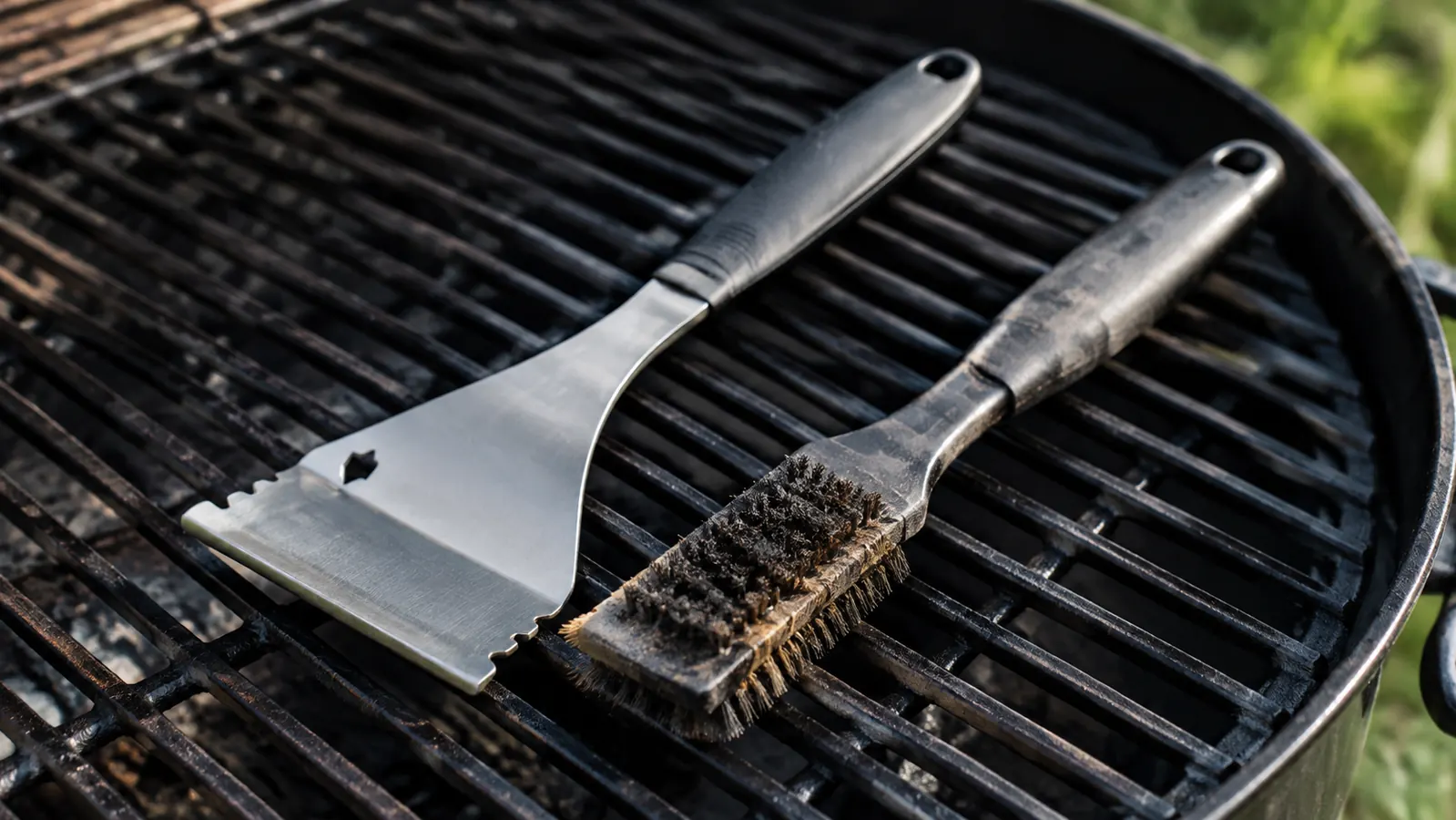
I used a wire bristle brush for about twenty five years and never thought twice about it. Then my son-in-law bit down on a burger at my own table one Sunday in late June and stopped chewing. He pulled a sliver of wire out of it and held it up between two fingers. Nobody got hurt that day. That was luck, and everyone standing there knew it. That was the week I stopped using wire brushes. I went through a couple of bristle free tools that were too soft to do any real work before I landed on the Weetiee bristle free brush and scraper, and I have not put a wire brush on a grate since. This is the comparison I wish somebody had written for me before that happened, because the safety argument is the obvious one and it is not actually the whole story.
What I wanted to know, and could not find written down honestly anywhere, was simple. Does a bristle free tool actually clean as well? Because a safer brush that leaves the grate dirty is not safer, it just moves the problem. I have now run the Weetiee for about a year across a charcoal kettle, a three burner gas grill and a pellet smoker, through a Michigan winter, against the wire brush I kept in the garage specifically so I could keep comparing. Here is where each one genuinely wins.
| Weetiee bristle-free scraper | Traditional wire bristle brush | |
|---|---|---|
| Loose bristle risk | None, there are no bristles | Real, and gets worse as it wears |
| Cleaning a hot grate | Very good, scrapes carbon off directly | Very good |
| Cleaning a cold, neglected grate | Good, needs more passes | Fair, bristles splay and skid |
| Getting between round bars | Fair, the edge rides the top of the bar | Better, bristles wrap the bar |
| Cast iron grates | Safe, will not strip seasoning if you are sensible | Can scour seasoning off |
| Effort required | More arm, less wrist | Less arm, more wrist |
| Lifespan | A year so far with no visible wear | About one season before it needs replacing |
| Cleaning the tool itself | Rinse under a hose, done | Gunk collects at the base of the bristles |
| Best for | Anyone who does not want metal near their food | Cooks who want the fastest pass on round bars and inspect every time |
How I Cleaned With Each One
My routine has not changed in years. I bring the grate up hot for about ten minutes after the food comes off, then clean while it is still hot, because carbon that is still soft comes off with almost nothing and carbon that has cooled and set is a different job entirely. I did that identically with both tools. The only thing I changed was which one was in my hand, and I alternated week to week so I was not comparing a fresh grate to a neglected one.
I also deliberately let the kettle grate go dirty twice, once for about ten days and once over a long weekend when it rained, so I could see how each tool handled the harder job rather than only the easy one. That is where most tool comparisons quit, and it is where the interesting differences actually showed up. Thirty years in a tool and die shop taught me that anything performs well under ideal conditions. What matters is what happens when conditions are not ideal.
One more thing about method, because it changes what a comparison like this is worth. I cleaned three genuinely different grate types, not one. The kettle has round bar cast iron, the gas grill has flat bar stainless, and the pellet smoker has round bar porcelain coated steel. Those three surfaces behave differently enough that a tool can look excellent on one and mediocre on another, and most reviews only ever test whatever the writer happens to own. Where the two tools disagreed, it was almost always the shape of the bar that explained it rather than anything about the tool itself.
I did not time anything with a stopwatch, and I want to be straight about that. What I tracked was simpler and more useful, which was how many passes it took before the bars looked bare and whether I ended up reaching for the other tool to finish the job. That second one is the honest test. Twice in a year I picked up the wire brush to finish a spot the scraper was struggling with, both times on the round bar kettle grate, and both times it was a patch of hardened drippings on the underside of a bar.
On a Hot Grate, It Is Close to a Tie
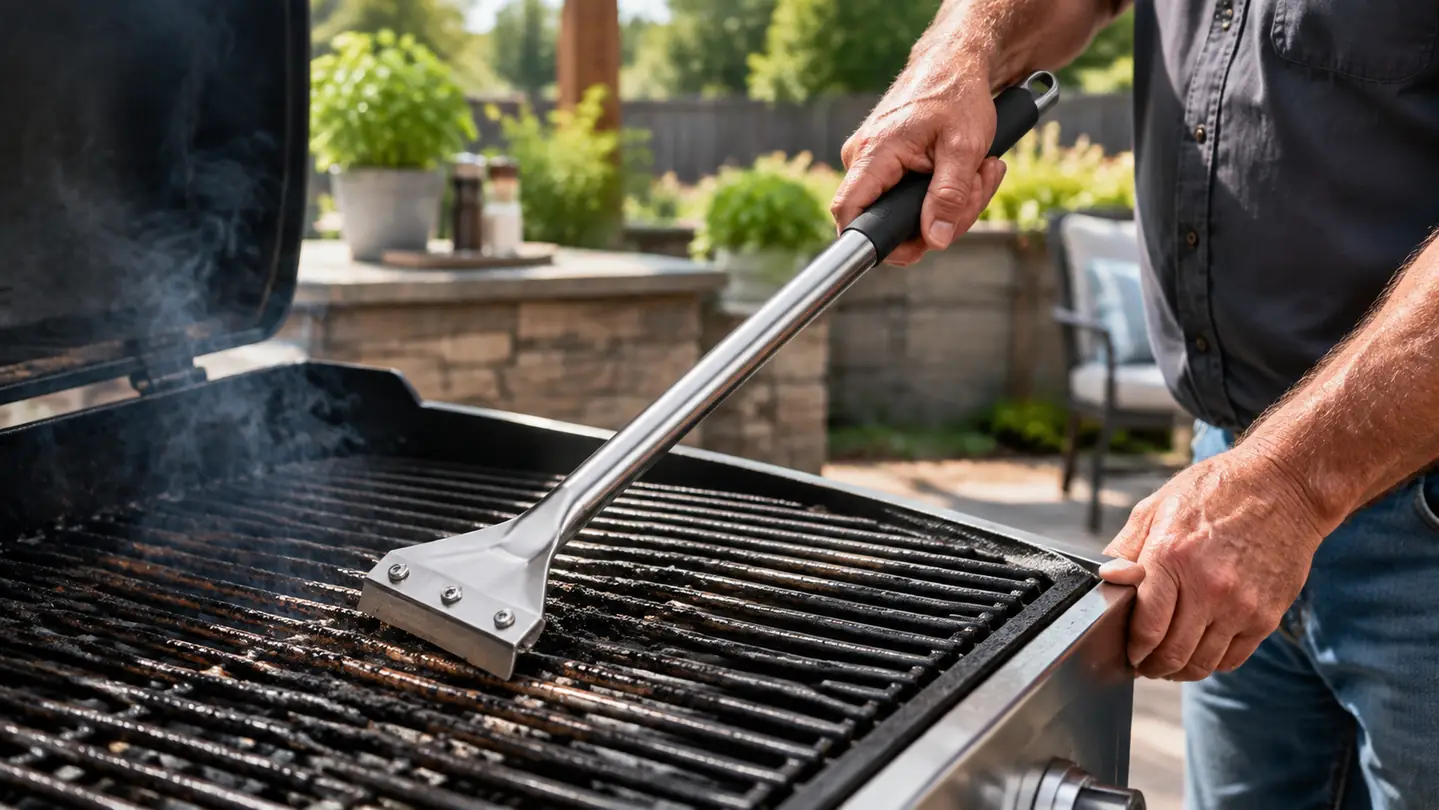
Cleaning hot, both tools do the job and the Weetiee is arguably faster. The scraper edge sits flat on the bars and shears carbon off in a line instead of flicking at it, so on my flat bar gas grill grates two or three passes and the surface is bare metal. The wire brush needs about the same. If your entire cleaning routine is a hot grate right after cooking, and it should be, you are not giving anything up by switching. That was the finding that actually surprised me, because I expected to be trading cleaning power for safety and I was not.
Where the wire brush keeps a real advantage is round bars. Bristles wrap around the curve of a round rod and get the underside and the sides in the same stroke. The Weetiee's edge rides along the top of a round bar and you have to work it from two or three angles to get all the way around. On my kettle, which has round bars, that means a slower pass. On the gas grill, which has flat bars, the Weetiee is plainly better. Look at your own grates before you decide, because that single detail matters more than anything else in this comparison.
The Cold, Neglected Grate Is Where They Separate
This is the job everybody actually faces, whatever they claim their routine is. On the grate I let go for ten days, the wire brush was frustrating. The bristles splayed out under pressure and skidded over the hardened drippings instead of biting into them, and the harder I pushed the more they splayed. On the same grate the Weetiee scraper edge caught the crust and lifted it. It took more passes and more shoulder than a hot grate does, but it worked, and it worked without me leaning on it hard enough to worry about what was coming off the tool.
There is a related point about cast iron worth making. I have cast iron grates on the kettle and a wire brush will take seasoning off them if you are aggressive, which then rusts, which then means re-seasoning. The Weetiee's edge does not scour the surface the same way. I am not going to claim it is impossible to damage seasoning with it, because you can damage anything if you try hard enough, but a year on mine still look right and I have not had to strip and re-season a grate.
The porcelain coated grates on the smoker are their own case and they favor the bristle free tool clearly. Porcelain chips, and once it chips the steel underneath starts to rust and the grate is on a countdown. A wire brush that catches an edge can take a flake off. The scraper rides flat across the surface instead of digging at it, and in a year I have not added a single new chip to grates that already had a few when I bought the smoker used. If your grates are porcelain coated, I think this comparison is close to settled before you even get to the safety question.
Ready to get the wire out of your food?
The Weetiee bristle free brush and scraper cleans as well as the wire brush I replaced and there is nothing on it to come loose. Check today's price on Amazon and see how it compares to what is hanging on your grill now.
Amazon Check Today's Price on Amazon →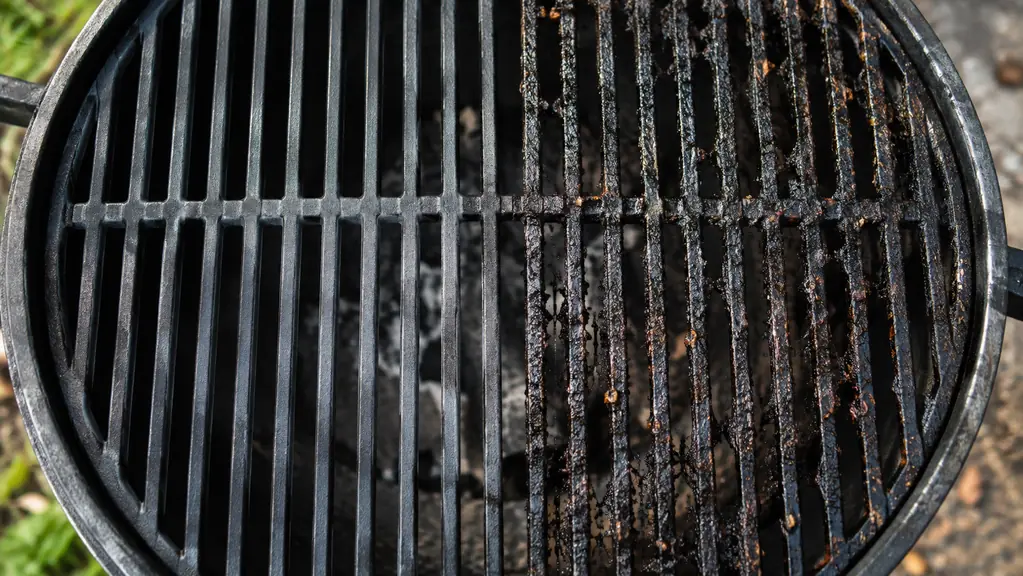
Wear, Upkeep and Cold Hands
A wire brush tells you it is done by falling apart, and the trouble is that the stage just before falling apart looks fine and is the most dangerous. Bristles loosen at the base before they visibly splay. That is why the standing advice with a wire brush is to inspect it before every single use and run a folded paper towel over the grate afterwards to catch anything that came loose. That is good advice and almost nobody follows it, including me, for twenty five years. The Weetiee has nothing to shed, so the inspection step simply goes away.
A year in, mine shows no meaningful wear. The scraper edge has dulled slightly and picked up some color from the heat, and that is all. Cleaning the tool itself is the other quiet win. Gunk used to collect down at the base of the wire bristles where you cannot get at it, and the brush would go back on its hook carrying last week's grease. The Weetiee goes under the hose and is clean in about ten seconds. My hands are stiff in cold weather after thirty years of machine work, and a tool I can rinse one handed and hang up matters more to me now than it would have at forty.
The Part About Technique
Switching tools meant relearning a small habit, and it is worth knowing in advance so you do not decide in week one that the scraper does not work. A wire brush is a wrist tool. You flick it and the bristles do the work. A scraper is an arm tool. You put it flat on the bar, keep it flat, and push through in a straight line with your shoulder behind it. People who pick one up and try to flick it the way they always have conclude it is useless, and I nearly did the same on my first cook with it.
The other adjustment is the angle. Held flat, the edge shears carbon off cleanly. Tipped up on a corner, it skids and burnishes the crust instead of lifting it, and you will work twice as hard for a worse result. It took me maybe three cooks to stop thinking about it. Once the motion becomes automatic, cleaning takes about the same time it always did, and I am no longer running a folded paper towel over the grate afterwards looking for pieces of metal.
Which One I Would Buy Again
The Weetiee, and I would not go back. The safety argument alone would be enough, because the downside of a wire brush is small in probability and genuinely severe when it happens, and there is no version of this where I want metal near food I am feeding my grandkids. But I would still choose it on performance for the way I cook. Flat bar gas grates, cold neglected grates and cast iron all favor it, and the hot grate case is a wash.
The honest case for keeping a wire brush is narrow but real. If all your grates are round bar, and you are disciplined about cleaning hot every time, and you genuinely will inspect the brush before each use and replace it at the first sign of wear, it will clean the underside of those bars faster. That is a lot of conditions, and the failure mode when one of them slips is a piece of wire in someone's food. I decided it was not a trade worth making on my own patio, and a year later I have not once wished for the old brush back.
Get the Weetiee brush and scraper
If you want a grill brush with nothing on it that can come loose and end up in dinner, this is the one that replaced the wire brush in my garage. See today's price on Amazon and read what other backyard cooks think.
Amazon See Today's Price on Amazon →